View all current promotions and packages! Click Here!
Nassau/Suffolk
(516) 858-2492
Blog

2026 Best Bolt and Nut Types for Global Buyers

Choosing the right Bolt Nut is not a catalog exercise. It is a decision about load, material compatibility, corrosion exposure, and how often a joint may need service. A bolt that looks substantial on a warehouse shelf can still be the wrong choice for a vibrating machine or a damp outdoor installation. Small details matter.

Grand View Research estimated the global fasteners market at USD 90.67 billion in 2023 and projected a 4.3% compound annual growth rate from 2024 to 2030. That figure covers fasteners broadly, not bolts and nuts alone, but it signals the scale of a supply chain where buyers must compare specifications, finishes, and availability carefully. NASA’s Fastener Design Manual, authored by Richard T. Barrett, is a useful technical reference. Its engineering approach emphasizes matching fastener selection to joint loads, materials, and service conditions. In plain terms: the application comes first.

This guide compares common bolt and nut types for global buyers, from hex bolts and flange nuts to carriage bolts and locking nuts. It also considers material, coating, strength class, and practical sourcing questions. A label alone is not enough. Confirm the specification. Check the environment. And leave room to review assumptions; even experienced teams can overlook a detail when purchasing across markets.
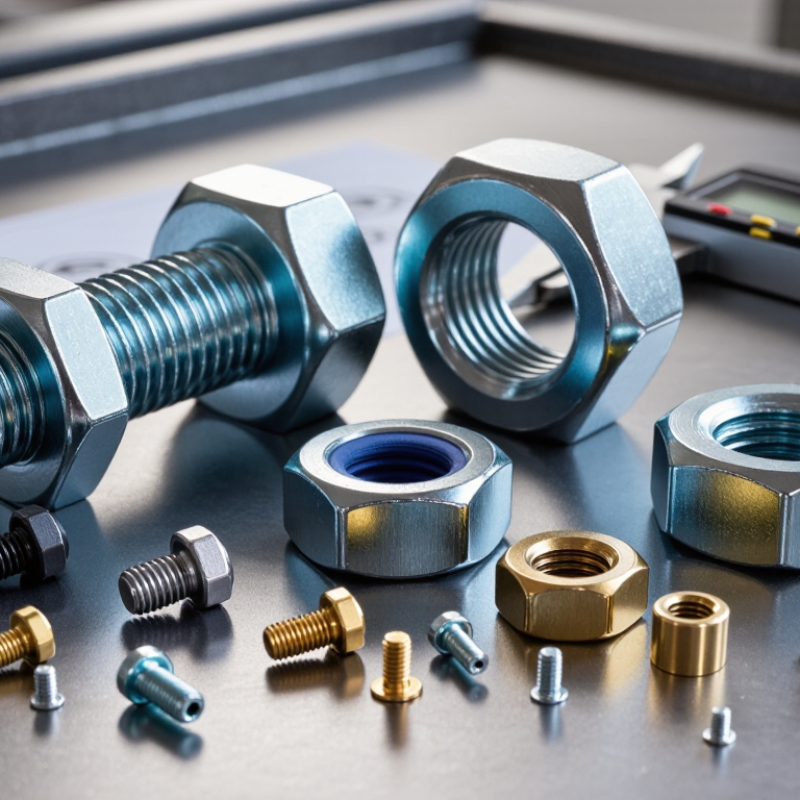
2026 Best Bolt and Nut Types for Global Buyers

Classify Bolt Types: ISO 4014 Hex Bolts and ASTM F3125 Structural Bolts

2026 Best Bolt and Nut Types for Global Buyers

Classify Bolt Types: ISO 4014 Hex Bolts and ASTM F3125 Structural Bolts

ISO 4014 hex bolts have a hexagonal head and a partially threaded shank. Buyers commonly encounter them in metric sizes for general mechanical and structural applications. Check the drawing for diameter, length, thread, and property class; ISO 4014 defines dimensions, not the bolt’s full strength requirements. A matching nut and washer matter, too. Fit matters.

ASTM F3125 covers structural bolts intended for steel connections, with grades such as A325 and A490. These bolts are selected to meet project-specific structural requirements and may call for compatible nuts, washers, and installation procedures. Do not treat an ISO 4014 bolt as a direct substitute. The head may look similar, but the standards and performance requirements differ. That distinction is easy to miss when comparing catalog listings, so verify the specified grade and assembly details before ordering. Even experienced buyers can rush this step.

Identify Nut Types: ISO 4032 Defines Standard Hex Nut Dimensions

For global buyers, identifying a nut by appearance alone is unreliable. ISO 4032 defines dimensions for standard hexagon nuts, including nominal thread size, width across flats, and nut height. These measurements make drawings and inspection records easier to compare across suppliers. Small details matter. For instance, the ISO table gives an M10 nut a 16 mm width across flats and an 8.4 mm height. A socket that is slightly too small will not seat properly, even when the nut looks close by eye.

When sourcing, match the nut’s thread diameter and pitch to the bolt, then confirm the standard designation on the drawing. ISO 4032 dimensional conformity does not, by itself, confirm material, coating, or load capacity; specify those separately. Check across-flats dimensions with calipers and inspect threads for damage before assembly. A thread gauge helps. Keep the unit system explicit, and do not infer inch dimensions from metric labels. Mixed standards can look nearly identical, yet tool fit or thread engagement may differ. Small purchasing details are easy to overlook, so clear specifications and documented checks matter.

2026 Best Bolt and Nut Types for Global Buyers

ISO 4032 Standard Hex Nut Dimensions

ISO 4032 specifies dimensions for standard-style hexagon nuts. This chart compares nominal width across flats and nut height, in millimetres, for selected metric sizes. Confirm the applicable standard edition and product specification when sourcing.

Compare Fastener Materials and Coatings Under ISO 898-1 and ISO 4042

For global buyers, material and coating choices should be checked separately. ISO 898-1 defines mechanical property classes for carbon and alloy steel bolts, screws, and studs. Classes such as 8.8 and 10.9 indicate strength requirements, not corrosion performance. Check the specified tensile strength, proof load, and hardness against the fastener’s intended load. Keep the inspection records. A certificate is useful, but a sample test can reveal inconsistencies between batches.

ISO 4042 addresses electroplated coating systems for fasteners. Zinc coatings can help protect steel in ordinary atmospheric exposure, while the coating thickness may affect thread fit. Test assembled parts with the actual nuts; a drawing alone may not catch binding. Electroplating can also introduce hydrogen, which may contribute to delayed fracture in susceptible high-strength fasteners. ISO 4042 includes controls for this risk, but process selection and verification still matter. Stainless steel may suit some corrosive settings, yet its selection requires a separate review of strength, environment, and applicable specifications. The awkward part: one coating rarely fits every site. Salt spray, temperature, and maintenance conditions can differ sharply between shipments and installations.

Decode Strength Classes: ISO 898-1 Class 8.8 Means 800 MPa Nominal Strength

For global buyers, the marking 8.8 is more than a strength label. Under ISO 898-1, the first 8 indicates a nominal tensile strength of 800 MPa. The second 8 indicates a nominal yield-to-tensile ratio of 0.8, giving a nominal yield strength of 640 MPa. These figures help compare fasteners, but they are not a direct load rating for a finished joint.

Details matter. ISO 898-1 sets mechanical requirements, and specified minimum values can vary with bolt diameter. A 10 mm class 8.8 bolt does not automatically make every connection safe at a particular load. Thread size, grip length, material thickness, tightening method, and service conditions all affect performance. Check the property-class marking on the bolt head and match it against the test certificate and purchase specification. Don’t rely on appearance. In practice, this step is easy to rush. It shouldn’t be. Class 8.8 describes the bolt’s properties; engineering calculations determine whether it suits the assembly.

Specify Global Threads: ISO Metric Series and ASME B1.1 Unified Inch Threads

For global buyers, thread designation is not a minor drawing detail. It determines whether a bolt enters a nut smoothly or stops after a few turns. ISO metric threads use millimetres, with pitch stated as the distance between thread peaks. An M10 × 1.5 bolt, for example, has a 10 mm nominal diameter and a 1.5 mm pitch. Check pitch carefully.

ASME B1.1 defines Unified inch threads, commonly marked UNC for coarse threads and UNF for fine threads. A 1/2-13 UNC fastener has a nominal diameter of 1/2 inch and 13 threads per inch. Do not assume that similar-looking metric and inch fasteners will fit together. They will not. Even a small pitch difference can damage threads during assembly.

A clear purchase specification should name the thread system, diameter, pitch or threads per inch, and tolerance class where required. For example, write “M10 × 1.5, ISO metric” rather than simply “M10.” I have seen order notes omit the thread series, leaving suppliers to guess; that is an avoidable risk, though drawings can also be incomplete. Confirm the designation against the mating part and check sample fasteners with a thread gauge before approving a large shipment.

Wait! You Forgot Your Free Estimate!

Call us at (516) 858-2492
for a free estimate or simply click the button below:

Submit Request Form
adelphic tracking pixel