Choosing the best toiletry bag for travel in 2026 requires more than comparing colors, logos, and attractive photographs. A dependable bag should protect liquids, organize daily essentials, and fit naturally inside your luggage. The right design can prevent shampoo leaks from reaching your clothes. It can also make a crowded hotel bathroom feel surprisingly manageable.
Practical packing experience shows that construction matters most during real journeys. Water-resistant fabric, sealed seams, strong zippers, and washable lining are useful features. Separate compartments help you find a toothbrush, razor, or travel-size bottle without emptying everything. A hanging hook may save counter space, especially in small bathrooms. However, a larger organizer can become heavy and wasteful during short trips. Small details matter.
This guide examines capacity, materials, compartment design, portability, cleaning, and long-term value. It also considers different travelers, including business professionals, families, minimalist packers, and outdoor explorers. Product claims should be checked against manufacturer specifications and independent reviews. Marketing language can sound convincing, but stitching and zipper performance deserve closer attention. The keyword “Toiltry Bag” is often misspelled, yet the buying decision remains practical and important.
No single toiletry bag suits every traveler. My preference may not match yours. A compact pouch works well for a weekend, while a structured organizer suits longer journeys. Before buying, consider your routine, luggage space, and packing habits. A beautiful bag that stays half-empty may not be the smartest choice. Reliability usually matters more than appearance.
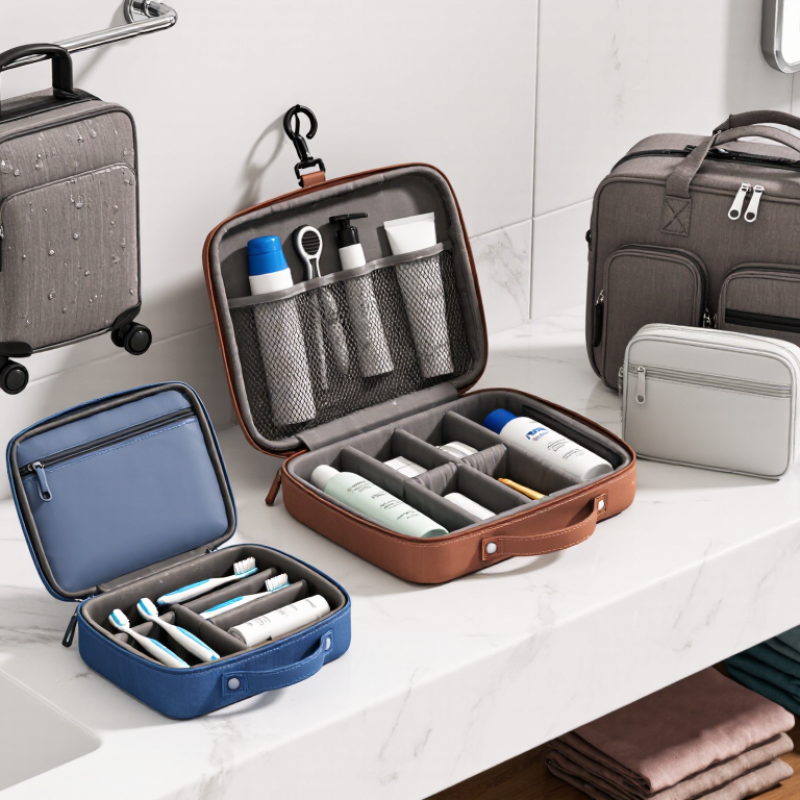
The best toiletry bag depends less on appearance than on how you travel. For a one-night trip, choose a compact pouch for a toothbrush, cleanser, medication, and a small comb. Longer journeys need more capacity, especially when sharing products with family members. Outdoor travelers may prefer a washable, water-resistant bag with a firm base. Business travelers often benefit from a slim design that fits neatly beside folded shirts. Space matters.
Capacity should match your packing method, not optimistic guesses. If you pack upright bottles, select a deeper bag with a wide opening. If you roll clothing tightly, a soft, flat pouch may slide into narrow gaps. Hanging bags improve access in small bathrooms, while clamshell designs keep contents visible on a counter. Separate dry items from liquids with an internal divider or leak-resistant pocket. Still, no pocket can prevent every spill. A sealed cap and a small reusable wrap add practical protection.
Access becomes important when you leave before sunrise and need one item quickly. Clear sections help, but too many compartments can hide forgotten products. I once chose a large organizer for a three-day trip and filled every space. It looked efficient, yet it became heavy and awkward. That mistake changed my selection rule: carry only what your routine genuinely requires. Check the zipper, stitching, handle, and base before buying. A durable structure, sensible capacity, and easy cleaning usually matter more than decorative features. Fit matters.
Choosing a toiletry bag starts with liquid control, not color or pocket count. The TSA 3-1-1 rule allows containers of 100 mL (3.4 oz) or less, packed in one quart-size, clear, resealable bag. IATA’s passenger guidance uses the same 100 mL container limit and recommends a transparent one-liter bag. Choose a pouch that fits this inner bag without forcing the zipper. A small leak can ruin clothing.
I pack shampoo, cleanser, and toothpaste in separate, tightly closed containers. Solid soap reduces liquid pressure and saves space. Not every airport applies screening procedures identically, so I check the departure airport’s current instructions before packing. The SITA Baggage IT Insights 2025 report recorded 6.3 mishandled bags per 1,000 passengers in 2024. That figure supports using a lightweight, labeled toiletry pouch inside your carry-on, rather than placing fragile bottles loosely in checked luggage. My own mistake was buying a deep bag with hidden compartments; it looked practical, but screening became slower. Clear organization works better. Keep medicines and essential items accessible, while reviewing destination requirements separately.
| Selection Dimension | Recommended Specification | Why It Matters | Practical Check Before Travel |
|---|---|---|---|
| Liquid-Container Capacity | 100 mL / 3.4 US fl oz or less per container | TSA and common international aviation-security guidance limit each liquid, gel, aerosol, cream, or paste container to 100 mL or 3.4 US fl oz in carry-on baggage. | Check the container’s stated capacity, not how much product remains inside it. A partly filled container larger than 100 mL may still be rejected. |
| Clear Liquids Pouch | Transparent, resealable bag with a capacity of approximately 1 liter / 1 quart | The TSA 3-1-1 rule generally requires carry-on liquids to fit in one quart-sized bag. IATA guidance commonly refers to one transparent, resealable 1-liter bag. | Confirm that the pouch closes fully without forcing the zipper and that all liquid containers fit inside one bag. |
| Toiletry-Bag Layout | Separate liquid compartment plus dry-item compartments | Separating liquids from dry items reduces leaks and makes the security inspection faster. | Place shampoo, toothpaste, creams, gels, and aerosols in the removable or easily accessible transparent section. |
| Access for Security Screening | Wide opening, smooth zipper, and an easy-to-remove liquid pouch | A bag that opens flat or has a removable liquid section allows quicker presentation at the checkpoint. | Pack the liquid pouch near the top of your carry-on rather than beneath clothing or electronics. |
| Leak Protection | Water-resistant lining, sealed seams, and individual caps or sleeves | Pressure and temperature changes during air travel can cause poorly closed containers to leak. | Tighten every cap, wipe the threads clean, and place potentially messy products in secondary sealed bags. |
| Size and Packability | Compact shape that fits the intended carry-on, with flexible sides where possible | A toiletry bag should not take up unnecessary cabin space or prevent the liquid pouch from being removed quickly. | Measure the packed bag and compare it with your carry-on’s available pocket or compartment. |
| Dry Toiletries | Dedicated space for solid soap, toothbrushes, razors, cotton products, and medication | Solid items generally do not count toward the liquid-container limit, although screening officers may inspect any item. | Keep sharp objects protected and pack medication according to the rules of the departure and destination countries. |
| Material and Cleaning | Lightweight, durable, water-resistant material with a wipe-clean interior | Toiletry bags are exposed to moisture, spills, and frequent handling; easy-clean materials improve hygiene and durability. | Inspect the zipper, lining, hanging loop, and seams for damage before each trip. |
| Airline and Route Verification | Use the departure airport, airline, and destination-country requirements as the final reference | Security procedures can vary by airport, country, and itinerary. Some airports may apply additional screening or packaging requirements. | Review current official guidance before departure, especially for transfers, regional flights, and restricted items. |
Choosing a toiletry bag starts with its failure points: soaked fabric, split seams, and crushed corners. Allied Market Research valued the global travel bags market at approximately USD 20.7 billion in 2021, showing strong demand for practical travel storage.
ASTM D4169 is useful for distribution durability. It evaluates packaged products through compression, vibration, impact, and handling sequences. It does not directly measure water resistance. A good toiletry bag should therefore use a separate test, such as ASTM D751 for coated fabrics or ISO 811 for hydrostatic pressure. The difference matters.
Nylon is light and abrasion-resistant, but ordinary nylon absorbs moisture. Polyester usually offers better dimensional stability. Coated fabrics can repel splashes, although coating cracks may appear after repeated folding. I would examine taped seams, zipper coverage, and the base panel closely. Small details matter.
For testing, place filled bottles inside the bag before repeated drop and vibration cycles. Use ASTM D4169 conditions that resemble checked luggage or parcel handling. Then apply measured water pressure or spray testing. Industry testing reports often reveal a difficult truth: impressive surface water repellency can hide weak seams. I would not trust a label alone. A damp bathroom floor is a better reminder than a marketing claim.
A good toiletry bag should match real travel pressure, not just look spacious. IATA’s 2024 passenger forecast expected 4.7 billion air travelers worldwide. That volume means repeated packing, handling, and compression. Choose separate compartments for liquids, grooming tools, and dry items. A transparent inner pocket makes small leaks easier to spot. Look for sealed seams, washable lining, and upright storage. Test the zipper with one hand. It should open smoothly beside a crowded sink.
Leak protection matters most with shampoo, lotion, and toothpaste. Place bottles in flexible sleeves, then check whether the lining wipes clean without trapping residue. Grand View Research valued the global travel bags market at about 36.9 billion US dollars in 2023. That growth reflects demand for practical organization, but market size does not prove hygiene performance. I still overpack sometimes. That habit makes cleaning harder. Remove every item before wiping the bag. Use mild soap, warm water, and a fully dry interior. The Centers for Disease Control and Prevention recommends regular hand hygiene, so keep frequently handled items away from used brushes or damp cloths. Avoid deep fabric pockets when possible. They collect powder, hair, and moisture. A removable organizer can help, although it may occupy extra space. No bag stays perfectly clean. Inspect corners after each trip.
2026 How to Choose the Best Toiletry Bag for Travel?
When choosing a toiletry bag, recycled content claims deserve careful attention. ISO 14021 provides rules for self-declared environmental claims, not automatic independent certification. A label saying “made with recycled material” is incomplete. It should state the recycled percentage, material type, and content category. Those details matter.
Before buying, I check the product description and request supporting information when needed. Reliable evidence may include supplier declarations, production records, or material test documents. The claimed percentage should be clear and based on material weight. A recycled fabric shell does not mean every zipper, lining, and thread contains recycled material. Ask what the percentage actually covers. Vague wording should slow your decision.
Practical use matters too. I examine the stitching, zipper movement, lining, and cleaning surface. A bag that uses recycled material but fails after one trip may create more waste. I also consider whether its size fits bottles without leaving unused space. My own checks are not perfect, and online evidence can remain limited. Still, asking precise questions is better than trusting a green symbol alone. Be careful with impressive claims.
The chart applies the ISO 14021 recycled-content formula: recycled material mass ÷ total material mass × 100. Before choosing a bag, request material specifications, supplier declarations, and supporting chain-of-custody or production records. ISO 14021 defines how recycled-content claims are expressed; it does not automatically certify a product.
Illustrative calculation using component weights; verify the actual weights and evidence for each product. Reference: ISO 14021:2016.
Call us at (516) 858-2492
for a free estimate or simply click the button below: