Who Are the Best Energy Efficient Windows Manufacturers in China?
Choosing among China’s Energy Efficient Windows manufacturers takes more than comparing glossy catalogs. A low U-factor matters, but so do airtight frames, reliable seals, and careful installation. On a cold morning, a well-sealed window should help reduce drafts around the sash. In a hot, sunny room, suitable glazing can limit unwanted heat gain.
Energy efficiency expert Amory Lovins captured the broader principle: “Efficiency is the ability to do more with less.” For windows, that means assessing the complete assembly, not just the glass. Buyers should compare certified performance data, such as U-factor and solar heat gain coefficient, and check whether test results match the offered product. Ask about frame materials, glazing options, hardware, warranty terms, and quality-control procedures. Request samples. Inspect the corners and seals.
There is no single “best” manufacturer for every project. Climate, building design, budget, and export requirements all change the answer. A supplier suited to a coastal apartment may not fit a mountain home. That distinction is easy to miss. This guide examines Chinese manufacturers through practical evidence: product specifications, production capabilities, customization, and documented service experience. Company claims deserve scrutiny, too. A polished brochure cannot verify long-term performance, and factory visits may not reveal every weakness. The comparison is useful, not perfect. Readers should confirm current certifications and project references before choosing a supplier.
What Defines an Energy-Efficient Window
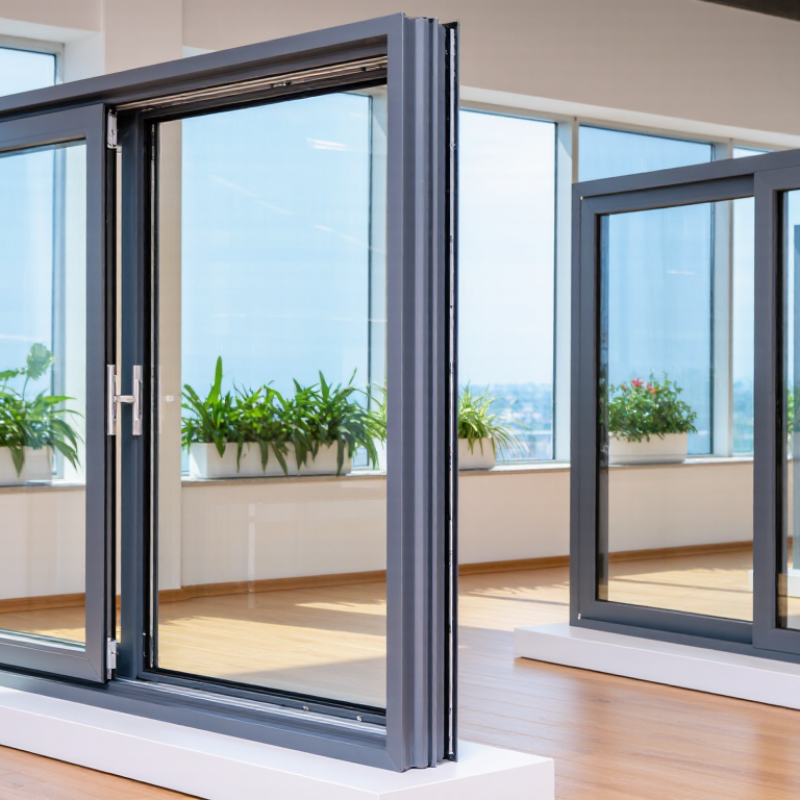
An energy-efficient window is a complete assembly, not just a pane of advanced glass. Its frame, seals, spacers, and installation all affect heat loss and drafts. A lower U-factor generally means better insulation, while the solar heat gain coefficient indicates how much sunlight becomes indoor heat. The right balance depends on climate, orientation, and shading. A south-facing window may need different performance than one beneath a deep porch. Small details matter.
Ask for whole-window test data, rather than glass-only figures. Check air leakage ratings and whether performance values apply to the exact size and configuration you plan to buy. Low-emissivity coatings can reduce heat transfer, while insulated glass units may use gas between panes. Yet these features cannot compensate for loose seals or poor installation. That sounds neat, but real buildings are less tidy. A carefully installed, moderately specified window may perform better than a premium unit fitted with gaps. Compare documented results, inspect sample corners and weatherstripping, and ask how the manufacturer controls quality across production batches.
Who Are the Best Energy-Efficient Windows Manufacturers in China?
What defines an energy-efficient window? Its thermal performance is a key measure: lower U-factor means less heat transfer. The figures below are approximate examples for common glazing types; actual performance varies by frame, coating, gas fill, and window design.
U-factor is measured in Btu/h·ft²·°F. Compare whole-window ratings under the same test standard when evaluating products.
Key Performance Standards for Comparing Window Manufacturers
Who Are the Best Energy Efficient Windows Manufacturers in China?
Key Performance Standards for Comparing Window Manufacturers
Compare tested performance, not claims like “thermally broken” or “high efficiency.” The U.S. Department of Energy estimates that windows account for 25–30% of residential heating and cooling energy use. That makes whole-window U-factor and solar heat gain coefficient (SHGC) useful starting points. Lower U-factor means less heat transfer; SHGC shows how much solar heat enters. The National Fenestration Rating Council explains these values on its product labels. Check that quoted figures apply to the complete window, including frame and glazing—not glass alone.
Ask for independent test reports showing air leakage, water resistance, and structural performance, alongside thermal ratings. Compare the same window size, opening style, and glazing configuration; otherwise, the numbers may not be comparable. ENERGY STAR’s criteria vary by climate zone, so a rating suited to one market may not suit another. For China-based manufacturers, request reports from an accredited laboratory and confirm test methods, dates, and product models. A brochure is not proof. I still find this easy to overlook.
Tips: Check the spacer, seals, and frame corners in a sample. Look for even compression, clean joints, and clear labeling. Small details matter.
How Chinese Manufacturers Differ in Products and Certifications
Chinese window manufacturers differ not only in price, but in how they build for particular climates. Some offer thermally broken aluminum frames, while others focus on uPVC or composite systems. Glass options may include double or triple panes, low-emissivity coatings, and gas-filled cavities. Ask for the tested U-factor and solar heat gain coefficient, not just a claim of “energy saving.” Small details matter.
Certifications and test reports vary by destination market. A supplier may provide product testing for thermal performance, air leakage, water penetration, and wind resistance, but the scope matters. Check whether the report covers the exact frame, glass, hardware, and dimensions you plan to order. A certificate for one configuration may not apply to another. No single certificate settles the question.
Reliable manufacturers can explain test methods and provide traceable documents from recognized laboratories. Compare values on the same basis, and confirm whether ratings use the same units and test conditions. Ask how frame depth, spacer design, and installation gaps affect performance. A neat catalogue is useful, but it cannot show how a window seals in a real opening. I would still verify the details before choosing.
How to Select a Manufacturer for Your Project
Selecting a Chinese energy-efficient window manufacturer starts with your project’s climate, not a catalogue’s biggest performance claim. Ask for tested U-factor, solar heat gain coefficient, and air-leakage data for the exact window configuration. These values affect heating, cooling, and comfort differently. Check whether the test reports identify the glass, frame, spacer, and opening style you plan to order. Details matter.
Request a sample corner or full-size unit. Inspect the frame joints, seals, drainage paths, and hardware, then ask how factory checks are recorded during production. A polished sample is useful, but it cannot prove every shipment will match. Ask for references from projects with similar weather exposure, building type, and order volume.
Clarify customization limits, packaging, lead times, replacement parts, and warranty terms in writing. If a supplier cannot explain how its test results apply to your design, pause.
I would still compare bids carefully; the lowest price can hide weaker glazing or vague service terms. A small trial order may reveal problems before they reach the jobsite.