Choosing the best Point Of Purchase Display Rack for 2026 means balancing visibility, durability, and measurable sales impact. A rack beside a checkout may suit small, quick-grab items; a wider floor unit can give larger products more room to be seen. The right choice depends on the store layout, product weight, restocking routine, and shopper flow. There is no universal winner.
POPAI’s 2012 Shopper Engagement Study reported that 76% of purchase decisions were made in-store. That benchmark is useful, but it is old and should not be treated as a forecast for every category or market. Deloitte’s 2024 Retail Industry Outlook also points to a retail environment shaped by changing shopper expectations, making flexibility and clear product communication practical priorities. Measure actual results where possible: compare sales, replenishment time, and damage rates before and after a display change. Check the details. A stable base, clean edges, readable pricing, and reachable shelves matter more than a dramatic shape that blocks an aisle. We should admit that display performance can be difficult to isolate from promotions, placement, and price changes. The sections ahead compare rack types, materials, and selection criteria, so retailers can make a grounded choice rather than chase a one-size-fits-all answer.
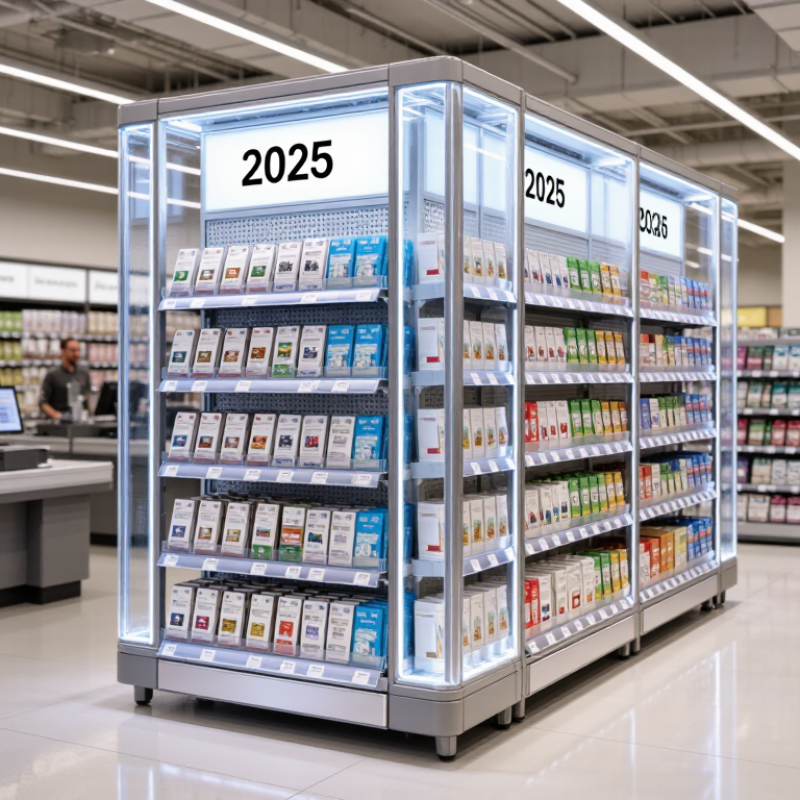
A point-of-purchase display rack is a product fixture placed where shoppers make buying decisions, such as an aisle end, checkout area, or shelf edge. It holds merchandise and uses placement, product visibility, and simple signs to draw attention. Some racks are freestanding; others attach to existing shelves. The best format depends on the product’s size, weight, and how quickly staff can refill it.
It works by reducing the distance between noticing and picking up an item. A shopper sees the product, reads a short message, and can reach it without searching another aisle.
The POPAI 2012 Shopper Engagement Study reported that 76% of purchase decisions in its U.S. survey were made in-store.
That figure is a useful signal, not a guarantee: results vary by store, category, and shopper. A rack can make a product easier to notice. It cannot make every shopper want it.
For 2026, evaluate stability, capacity, sightlines, and refill access before choosing a design. Check that the display does not block nearby products or create awkward reach angles. A small test in one store can reveal problems that a drawing misses, like a sign hiding the top shelf. That happens. Track sales and restocking time against a comparable location, then adjust placement or messaging. The test may be imperfect, but it is better than guessing.
The best rack depends on how shoppers move through a store and what the display must hold. Countertop racks suit checkout areas, where small products need to be visible without blocking payment space. Freestanding floor racks work in grocery aisles and seasonal zones, especially when staff need to restock quickly. Keep the footprint modest. Crowded aisles frustrate shoppers.
Apparel shops often benefit from tiered shelves or wall-mounted rails, which keep folded items and accessories easy to browse. In hardware or home goods stores, sturdy metal racks handle heavier products better than lightweight cardboard displays. A rotating rack can save space for compact items, but it may feel awkward in a narrow aisle. There is no perfect fixture for every store; even a well-planned display can underperform if customers cannot reach it comfortably.
Tips: Measure the selling area and check sightlines before choosing a rack. Test it with actual products, not just empty shelves. Look for stable construction, clear price labels, and simple restocking. Review the display after busy periods; the first layout may need adjustment.
For a 2026 point-of-purchase rack, prioritize visibility, stability, and quick restocking. POPAI’s 2012 Shopper Engagement Study reported that 76% of purchase decisions were made in-store. The study is dated, so treat it as context, not a current forecast. Still, clear sightlines matter: shoppers should spot products without reaching around tall headers or crowded shelves. Small details matter.
Match the rack to the product’s weight and the store’s traffic. A loaded base should not rock when someone takes an item. Adjustable shelves help when package sizes change, while tool-light assembly can save staff time during resets. One trade-off is easy to miss: lightweight racks move easily but may feel unstable on busy aisles. Test a fully stocked sample on the actual floor.
The U.S. Census Bureau reported that e-commerce represented 16.1% of U.S. retail sales in 2024. A rack can support that blended shopping experience with space for pickup instructions or a scannable product-information code. Keep those details readable and unobstructed. Ask suppliers for load ratings, material specifications, and cleaning guidance, then check whether replacement parts are available. A low purchase price is less useful if shelves bend or components cannot be replaced.
Key features to consider when choosing a rack
Prioritize a rack that fits the available floor space and can handle the products it will hold. Scores use an illustrative planning rubric from 1 (lower priority) to 5 (higher priority); they are not survey results or measured market data. Confirm load limits, dimensions, and local accessibility requirements before purchase.
A strong point-of-purchase display rack starts with the conditions around it. Cardboard is light and easy to update, making it useful for short promotions. Metal can handle heavier products and frequent restocking, though it may feel less inviting. Wood adds warmth, but its weight can complicate moves. Match the material to product weight, store traffic, and how often the display will change.
Layout affects whether shoppers notice a product and can reach it. Keep the main item near eye level, with enough space for hands to pick it up. A wide base can improve stability, but it should not block the aisle. Small details matter. Check the rack from several steps away, then view it beside nearby shelves. A layout that looks balanced on a drawing may feel crowded in a real store.
Branding works best when it helps shoppers understand the offer quickly. Use readable type, a clear product image, and one concise message. Too many colors or claims can compete with the products themselves. Leave open space. Before choosing a design, test it with actual stock and observe whether items remain visible after restocking. Track units sold, stockouts, and replenishment time; sales alone may not explain poor display performance. A small test can still miss seasonal differences, so review results across more than one period.
The best point-of-purchase rack is not automatically the largest or most eye-catching. It should fit the aisle, carry the product safely, and make restocking simple. Measure the footprint and sightlines. Check whether shoppers can reach products without blocking traffic or nearby shelves.
POPAI’s 2012 Shopper Engagement Study reported that 76% of purchase decisions were made in-store. The finding is older, but it highlights why placement and visibility deserve attention. The U.S. Census Bureau estimated that e-commerce accounted for 16.1% of total U.S. retail sales in the fourth quarter of 2024, leaving most sales outside e-commerce. Compare rack options using the same measures: usable capacity, setup time, durability, and total cost over the planned campaign.
Then test it. Place a sample rack in the actual aisle and observe whether shoppers notice it and staff can replenish it quickly. A compact unit may outperform a dramatic one if it keeps products reachable and the walkway clear. Record sales per week, but account for promotions and seasonal changes. No scorecard removes judgment. I would still question any choice based only on short-term sales; the display may have benefited from its location, not its design.
Compare common point-of-purchase (POP) display formats by footprint, product suitability, service needs, and practical trade-offs.
| Display Rack Type | Typical Size or Footprint | Best-Suited Products | Durability and Reuse | Restocking and Visibility | Advantages | Limitations | Best Fit for Retailers |
|---|---|---|---|---|---|---|---|
| Countertop Corrugated Display | About 8–16 in W × 6–12 in D × 12–24 in H | Small, lightweight packaged items such as snacks, accessories, samples, or checkout add-ons | Usually intended for short-term or campaign use; cardboard condition can deteriorate with moisture and heavy handling | Easy to reach near checkout; capacity is limited and frequent replenishment may be needed | Compact, lightweight, and easy to position on counters or shelves | Not suitable for heavy products, wet areas, or long-term high-wear use | Retailers seeking an economical impulse-purchase display with a small footprint |
| Floor-Standing Corrugated Display | Commonly about 18–24 in W × 12–18 in D × 48–72 in H | Light to moderately weighted packaged goods, seasonal items, and promotional assortments | Typically campaign-oriented; actual service life depends on board grade, construction, humidity, and handling | Shelves can present products at several levels; open fronts support customer access and staff replenishment | Large graphics and product capacity without a permanent fixture investment | Load capacity and stability depend on design; may be less durable than metal or wood fixtures | Short-term promotions, product launches, and seasonal merchandising |
| Wire or Metal Floor Rack | Often about 18–36 in W × 18–24 in D × 48–72 in H | Packaged goods, bottles, tools, household items, or other products requiring a sturdier fixture | Generally reusable; finish, joints, and rated shelf capacity should be checked for the intended environment and load | Open construction provides visibility from multiple angles; shelves are generally accessible for replenishment | Suitable for repeated use and a broad range of product weights when correctly specified | Heavier and bulkier to move; may require assembly and more storage space when not in use | Stores needing a durable fixture for ongoing promotions or repeat merchandising |
| Dump Bin | Commonly about 24–36 in square, with a height of roughly 30–48 in | Loose or individually packaged items that can be browsed in bulk, such as clearance goods, toys, or seasonal products | Available in disposable and reusable constructions; durability varies by material and frame design | High product volume, but items can become mixed; staff may need to tidy and replenish it frequently | Encourages browsing and accommodates many small items in a compact floor area | Products can be difficult to organize, identify, or reach at the bottom; not ideal for fragile items | Retailers promoting bulk, clearance, or self-selection merchandise |
| Clear Acrylic Counter Display | Often about 8–18 in W × 6–12 in D × 8–18 in H | Small, lightweight products where an unobstructed view is useful, such as cosmetics, confectionery, or accessories | Reusable with care; surfaces may scratch, and suitability depends on the acrylic thickness and construction | Good product visibility on counters; capacity is usually modest and products may need orderly arrangement | Displays merchandise without visually blocking it and can be wiped clean | Can cost more than disposable board displays; may scratch or crack under impact | Retailers prioritizing clear product presentation at a counter or service desk |
| Pallet Display | Often built around a 40 × 48 in pallet footprint in North American retail; total height varies by display and load | Case-packed, bulky, or high-volume merchandise suited to pallet handling | Designed for bulk handling when the pallet, structure, and load are appropriate; confirm handling and stacking requirements | Can hold substantial stock and support replenishment by case; usually needs accessible floor space | Efficient for high-volume promotions and products replenished in cases | Requires a large footprint and suitable equipment or store access; may obstruct sightlines | Retailers running high-volume promotions or displaying bulk merchandise |
How to select: Start with product dimensions and weight, available floor or counter space, expected campaign duration, replenishment frequency, and the store’s handling conditions. Treat the size ranges as general planning examples, not certified specifications. Confirm exact dimensions, load ratings, stability, accessibility, and applicable safety requirements with the display supplier before purchase.
Call us at (516) 858-2492
for a free estimate or simply click the button below: