Choosing a reliable China Outdoor Tent manufacturer requires more than comparing catalog prices. Global buyers need evidence of practical experience, stable production, and responsible communication. A strong supplier should understand different camping conditions, from humid forests to windy coastlines. Material selection matters. Ripstop polyester, aluminum poles, waterproof coatings, and reinforced webbing must match the tent’s intended use.
A professional factory can explain its process clearly. Ask about fabric testing, seam sealing, pole strength, zipper cycles, and carton protection. Request a production sample before placing a large order. Inspect the stitching closely. Look for even seams, clean corners, firm bartacks, and accurate dimensions. A controlled rain test can reveal weak points that photographs hide. Sometimes, a beautiful sample performs poorly in real weather.
Reliable manufacturers should provide traceable specifications, inspection records, and realistic production schedules. They should also discuss packaging, labeling, replacement parts, and after-sales support. Independent inspections may add cost, but they reduce uncertainty for overseas buyers. Certifications can be useful, although their value depends on authenticity and relevance.
No factory is perfect. Even experienced suppliers may face fabric delays, color variation, or communication gaps. Buyers should record these risks instead of ignoring them. Clear drawings, approved samples, and written quality standards create a stronger partnership. This guide examines China’s leading Outdoor Tent manufacturers through product capability, factory experience, quality control, customization, export service, and buyer reliability. The goal is practical judgment, not exaggerated promises.
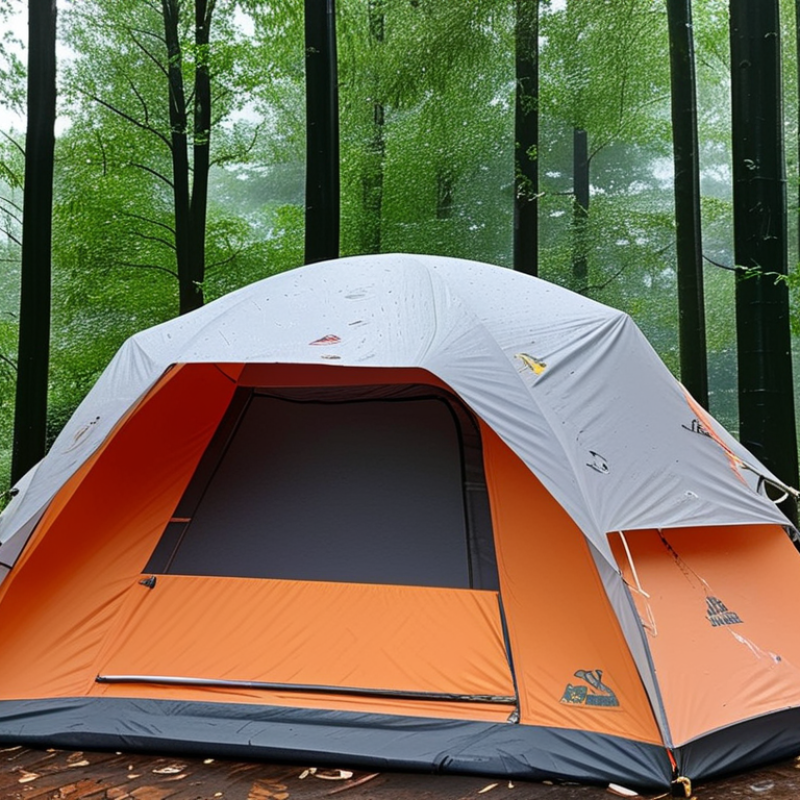
China’s Role in the Global Outdoor Tent Manufacturing Industry
China remains a major production hub for outdoor tents sold across global markets. UN Comtrade data shows China exported more than US$1 billion in tents and related camping goods in 2023. The category includes synthetic-fiber tents, family shelters, and temporary outdoor structures. Grand View Research estimates the global camping tent market will keep expanding through 2030, supported by camping tourism and outdoor recreation. This demand gives Chinese manufacturers strong advantages in fabric sourcing, cutting efficiency, and large-volume assembly.
Factory capability is visible in practical details. Many suppliers operate automated cutting tables, taped-seam lines, hydrostatic-pressure testing, and sample rooms. These systems help control leakage, packed size, and repeated setup performance. However, production scale does not guarantee stable quality. In buyer inspections, small problems often appear around zippers, pole joints, seam corners, and carton compression. I would not treat export volume as proof of technical reliability. That assumption needs more testing.
Tips: Ask for test records, material specifications, and production samples from the same batch. Check waterproof performance after folding, not only when the tent is new. Review compliance documents for the destination market, including labeling and chemical requirements. A useful audit should include factory capacity, worker training, traceability, and corrective-action records. Some suppliers communicate well during sampling but struggle during peak seasons. That weakness is easy to miss.
| Data Dimension | Documented China-Related Data | Relevance to Global Buyers | Typical Buyer Verification Points | Reference |
|---|---|---|---|---|
| Global Manufacturing Position | China is one of the world’s largest textile, synthetic-fabric, hardware and finished-goods manufacturing bases, supporting the production of camping, hiking, family, beach and event tents. | Buyers can source fabric, webbing, zippers, poles, stakes, packaging and finished tents through a comparatively integrated supply chain. | Check whether the factory makes the complete tent or only performs cutting, sewing, printing or final assembly. | National Bureau of Statistics of China |
| Main Manufacturing Regions | Outdoor and textile-related production is concentrated in developed coastal manufacturing areas, including Zhejiang, Jiangsu, Fujian, Guangdong and Shandong. | Coastal clusters generally provide access to textile mills, accessory suppliers, labor, inspection services, ports and international logistics. | Confirm the actual production address, subcontracting arrangements, export port and distance from key material suppliers. | China Statistical Yearbook |
| Common Product Categories | Production commonly covers backpacking tents, trekking tents, family camping tents, instant or pop-up tents, beach tents, canopy tents, rooftop tents and temporary shelter structures. | The broad product base supports private-label programs, multi-category sourcing and seasonal product launches. | Request product-specific test samples instead of evaluating a factory only from catalog images. | ISO 5912:2023 |
| Primary Tent Fabrics | Polyester and nylon are widely used for tent flysheets, inner tents and canopies. Common technical treatments include PU coating, silicone coating, waterproof laminates and seam taping. | Material selection affects weight, tear strength, UV performance, hydrostatic pressure, pack size and product cost. | Verify fabric composition, denier, coating type, coating weight, hydrostatic pressure, colorfastness and tear strength through test reports. | ISO 5912:2023 |
| Pole and Frame Options | Common structural materials include fiberglass, aluminum alloys and steel. Aluminum is frequently selected for lightweight trekking and premium camping designs, while steel is common in larger structures. | Frame material influences strength, corrosion resistance, portability, assembly time and landed cost. | Check alloy or material specification, tube diameter, wall thickness, connector durability, corrosion testing and replacement-part availability. | ISO 5912:2023 |
| Production Capabilities | A complete tent production line may include fabric inspection, CAD pattern making, computerized cutting, screen or digital printing, high-frequency or heat welding, sewing, seam sealing, frame assembly, inspection and packing. | In-house processes can improve consistency and shorten coordination time, but capability varies significantly by factory. | Request process photographs, equipment lists, monthly capacity by product type and evidence of recent production. | ISO 9001 guidance |
| Quality-Control Stages | A practical control system includes incoming-material inspection, first-piece approval, in-line sewing checks, waterproofing or seam checks, finished-product inspection and carton inspection. | Multi-stage inspection reduces risks involving skipped stitches, incorrect dimensions, missing accessories, coating defects and packing errors. | Agree on an approved sample, inspection standard, acceptable quality limit, defect classification and corrective-action procedure. | ISO 9001 guidance |
| International Product Standard | ISO 5912:2023 specifies requirements and test methods for camping tents, including aspects related to safety, performance, usability and information supplied with the product. | Using an internationally recognized standard can create a clearer technical basis for product specifications and supplier acceptance. | Confirm the applicable edition, test scope, sample identity and whether the report covers the final production configuration. | ISO 5912:2023 |
| Chemical and Market Compliance | Products sold into different markets may need to meet requirements such as EU REACH chemical restrictions, U.S. consumer-product rules and destination-market labeling obligations. | Compliance responsibility depends on the destination, product construction, coatings, accessories and intended use. | Define the target countries before production and test fabrics, coatings, printed components, metals and plastic accessories where applicable. | EU REACH |
| Export and Customs Classification | Finished tents are commonly declared under HS heading 6306, which includes tarpaulins, awnings, tents and camping goods; the exact subheading depends on construction and customs rules. | Correct classification supports tariff research, customs documentation, landed-cost calculation and trade-data analysis. | Have the importer or customs broker confirm the final HS code, duty rate, origin rules and required documents for the destination country. | World Customs Organization |
| Customization Potential | Typical customization options include dimensions, fabric color, logo printing, labels, packaging, pole systems, ventilation layouts, room configurations and accessory sets. | Chinese manufacturing networks can support both standard products and private-label development, subject to minimum order and tooling requirements. | Clarify artwork ownership, mold or tooling charges, sample approval, minimum order quantity and change-control procedures. | Buyer specification and approved sample |
| Sustainability Considerations | Environmental performance depends on material selection, recycled-content claims, coating chemistry, product durability, repairability, packaging and end-of-life options. | Longer service life and verifiable material claims may reduce replacement frequency and improve sustainability communication. | Request recycled-content evidence, chemical test reports, packaging specifications, repair-part plans and substantiation for environmental claims. | ISO 14001 guidance |
| Logistics Advantages | China has extensive manufacturing and port infrastructure, with established ocean, air and express-freight channels for international shipments. | Buyers can select consolidated shipments, full-container loads or smaller express consignments according to order size and delivery urgency. | Compare EXW, FOB and CIF quotations; verify carton dimensions, gross weight, container loading plans, export documents and lead-time assumptions. | Ministry of Commerce of China |
| Supplier-Selection Priorities | The most reliable evaluation framework combines product-specific experience, verified production capability, documented quality controls, compliance readiness, communication quality and financial terms. | A lower quoted price alone does not demonstrate suitability; technical consistency and delivery reliability are equally important. | Use factory audits, sample testing, production inspections, contract specifications and pre-shipment checks before placing repeat orders. | ISO 9001 guidance |