China’s position in television manufacturing makes it a natural place to source a Tv Enclosure Cabinet, but supplier choice takes more than comparing quotations. TrendForce’s 2024 global TV shipment estimate put shipments at about 202 million units. That figure describes the wider television market, not enclosure demand alone. Still, it shows the scale and variety of equipment that cabinets may need to accommodate.
A dependable enclosure protects more than a screen. It must manage heat, moisture, dust, cable access, and mounting loads in the intended environment. For outdoor installations, ask manufacturers for documented ingress-protection test results and clear operating-temperature limits. Check material thickness, sealing details, ventilation design, and finish quality. A neatly welded corner and a consistent door gap tell you something, though they cannot replace test records.
The strongest Chinese manufacturers should be able to explain their design choices, provide drawings, and support sample inspection before production. Ask how they handle custom dimensions and replacement parts, too. These details often matter after delivery. Not every supplier will be equally transparent, and a polished catalogue is not proof of performance. That distinction is easy to miss. This guide examines how to compare China-based manufacturers using product evidence, production capability, and communication—not claims alone.
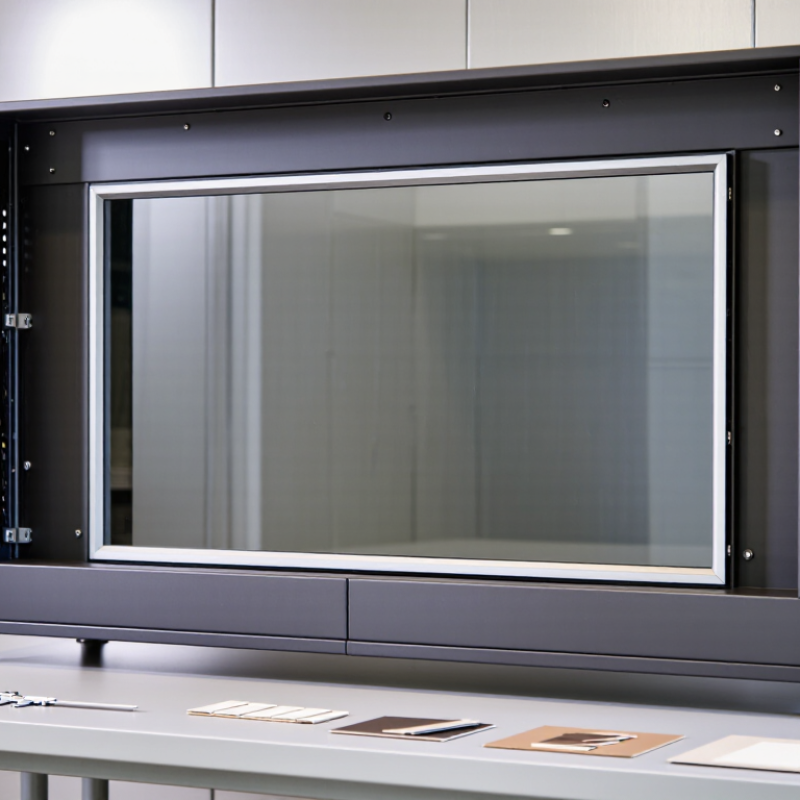
China’s TV enclosure-cabinet industry covers more than household television backs. Common products include molded rear covers, metal chassis, slim bezels, wall-mount housings, and lockable cabinets for public displays. Chinese fabricators combine sheet-metal cutting, bending, powder coating, and plastic molding to meet different size and finish requirements. Small details matter: ventilation slots must clear internal heat, while mounting points need to resist repeated adjustment.
Applications range from living rooms and hotels to classrooms, retail displays, transport hubs, and control rooms. Outdoor or semi-outdoor cabinets may add gaskets, sun shields, and drainage paths. These features increase weight and cost, so specifying “weather-resistant” without an exposure level can lead to mismatched products. That is a practical weakness in many project briefs.
Omdia’s 2024 TV Sets Market Tracker forecast global television shipments of about 208.3 million units in 2024. This indicates a large installed-product base, but it is not an estimate of enclosure sales. For buyers, the useful comparison is often service life, repair access, heat management, and finish consistency—not cabinet price alone. A neat exterior can still conceal poor airflow.
When comparing TV enclosure cabinet manufacturers, treat stated capacity as a starting point, not proof of available supply. Ask how many cabinets can be completed monthly in the exact size, material, and finish you need. A factory may quote 8,000 units, yet that figure could include other product types or ideal shifts.
Request recent production schedules, line photos, and a sample inspection record. Numbers need context. Check whether metal cutting, bending, welding, coating, and final assembly happen on site or through subcontractors. Each handoff can add time and inspection risk.
Measure lead time from approved drawings and deposit to packed goods, not from a sales estimate alone. Ask for timelines from comparable orders, including peak-season work and delays from custom tooling. Export data can help confirm destination markets, shipment frequency, and approximate order patterns. It cannot prove current capacity, quality, or buyer satisfaction.
Compare records with invoices, packing lists, and references where available, while recognizing that public data may be incomplete. That matters. Put capacity, lead time, and shipment evidence in one table, then flag gaps for written clarification. I would not treat a polished spreadsheet as certainty.
China Top TV Enclosure Cabinet Manufacturers?
Steel and Aluminum Cabinet Options: Comparing Common Sheet Thicknesses
Choosing sheet thickness for a TV enclosure cabinet involves more than comparing numbers. Steel commonly ranges from about 1.0 to 2.0 mm, while aluminum often ranges from 1.5 to 3.0 mm. These are practical starting points, not universal specifications. Cabinet size, mounting method, and door openings all affect rigidity. Thin panels may flex when a large door swings. That can cause rattling.
Steel generally provides greater stiffness at a similar thickness, which can help support broad panels and heavier fittings. A 1.2 mm steel body may suit a compact cabinet, while larger spans could need thicker sheet or formed reinforcement. Aluminum weighs less and can be easier to handle during installation. However, matching steel’s rigidity may require thicker aluminum or carefully designed folds. Weight matters.
For either material, inspect the corners, hinges, and mounting points—not just the flat panels. A cabinet with thicker sheet can still feel loose if its frame is poorly braced. Surface finish and the installation environment also influence long-term performance, especially where moisture is present. There is no perfect thickness. In practice, a small prototype or load check can reveal weaknesses that a specification sheet misses. That extra step is sometimes overlooked.
This comparison summarizes representative sheet thicknesses used in fabricated TV and display enclosures. Actual material availability and the suitable thickness depend on cabinet dimensions, mounting loads, forming details, environmental exposure, and the selected material grade.
| Material | Nominal sheet thickness | Approx. thickness in inches | Calculated sheet mass | Rigidity at equal thickness | Corrosion considerations | Typical enclosure considerations |
|---|---|---|---|---|---|---|
| Carbon steel | 0.8 mm | 0.031 in | Approx. 6.28 kg/m² | Higher than aluminum at the same thickness | Usually requires a suitable coating or finish, especially outdoors or in humid locations. | Useful for lighter panels and compact cabinets when the design includes appropriate stiffening and mounting support. |
| Aluminum | 0.8 mm | 0.031 in | Approx. 2.16 kg/m² | Lower than steel at the same thickness | Forms a protective oxide layer; finish selection is still important for harsh environments and appearance. | Low sheet mass can help reduce enclosure weight, but panel rigidity and attachment points need careful design. |
| Carbon steel | 1.0 mm | 0.039 in | Approx. 7.85 kg/m² | Higher than aluminum at the same thickness | Protective paint, powder coating, plating, or another specified finish may be needed for the service environment. | A practical option for formed cabinet panels where a balance of panel strength, fabrication, and cost is required. |
| Aluminum | 1.0 mm | 0.039 in | Approx. 2.70 kg/m² | Lower than steel at the same thickness | Generally offers good atmospheric corrosion resistance; dissimilar-metal contact and coastal exposure require consideration. | Can reduce cabinet weight; use bends, returns, ribs, or other features where additional stiffness is needed. |
| Carbon steel | 1.2 mm | 0.047 in | Approx. 9.42 kg/m² | Higher than aluminum at the same thickness | Specify a compatible finish for outdoor use and protect cut edges, seams, and fastener areas as required. | Often considered for general-purpose cabinet panels that need more resistance to handling and vibration. |
| Aluminum | 1.2 mm | 0.047 in | Approx. 3.24 kg/m² | Lower than steel at the same thickness | Surface treatment may be selected for added durability, color, or improved resistance in a particular environment. | A lightweight panel option; confirm stiffness around large openings, doors, and display mounting points. |
| Carbon steel | 1.5 mm | 0.059 in | Approx. 11.78 kg/m² | Higher than aluminum at the same thickness | Coating choice and maintenance affect long-term performance in wet, polluted, or coastal conditions. | May suit larger panels or cabinets requiring increased resistance to denting, subject to the overall structure. |
| Aluminum | 1.5 mm | 0.059 in | Approx. 4.05 kg/m² | Lower than steel at the same thickness | Consider alloy, finish, drainage, and contact with other metals when specifying an exposed enclosure. | Can provide a lighter alternative for larger enclosures; formed edges and reinforcement can improve panel stiffness. |
| Carbon steel | 2.0 mm | 0.079 in | Approx. 15.70 kg/m² | Higher than aluminum at the same thickness | Requires a corrosion-protection strategy appropriate to the installation and expected service life. | Greater sheet mass and thickness can support demanding panel requirements, but increase cabinet weight and forming effort. |
| Aluminum | 2.0 mm | 0.079 in | Approx. 5.40 kg/m² | Lower than steel at the same thickness | Often corrosion resistant in ordinary atmospheric conditions; verify suitability for chemicals, salt, and galvanic contact. | Provides a thicker lightweight panel option; check forming limits, fastener design, and support around concentrated loads. |
Calculation note: Sheet mass is theoretical for a flat, uncoated sheet, calculated using approximate densities of 7,850 kg/m³ for carbon steel and 2,700 kg/m³ for aluminum. Values are rounded; actual mass varies with alloy, grade, thickness tolerance, and finish. Thicknesses are nominal examples, not a universal specification.
For buyers comparing China top TV enclosure cabinet manufacturers, IEC 60529 ratings offer a practical way to assess protection. IP54 means the cabinet is protected against harmful dust buildup and water splashes. IP65 is dust-tight and tested against water jets. Neither rating means the cabinet can be submerged.
Look beyond the label. A TV enclosure may include a glass door, cable glands, ventilation openings, and mounting points. Each detail can affect how well the assembled cabinet resists dust and water. Ask for test documentation covering the actual configuration, not just the empty shell. Check that doors close evenly and seals remain compressed around the edges.
Installation matters, too. A cabinet exposed to direct rain, washdown, or coastal spray may need different protection from one mounted beneath a sheltered canopy. Heat is another concern: a sealed IP65 enclosure can trap warmth from the display, so confirm that its cooling design suits the operating conditions. Small details count. An IP rating is useful, but it does not describe every risk, such as condensation or sunlight exposure. That gap deserves attention.
China’s TV enclosure cabinet manufacturers can differ widely in how they document quality. A polished sample is useful, but it cannot show whether production stays consistent. Ask for the current ISO 9001 certificate and verify its scope, issuing body, and validity. The system should connect incoming material checks, fabrication, coating, and final inspection.
RoHS evidence matters when cabinets include electrical parts or are supplied for markets requiring RoHS compliance. Request supplier declarations and test reports that identify the tested material or component, rather than a generic document. Check report dates and product descriptions. Details matter. For metal housings, inspect coating thickness, grounding points, sharp edges, and mounting-hole positions against the approved drawing. A few millimeters can complicate installation.
Production traceability should link each cabinet or batch to material certificates, work orders, inspection results, and rework records. Ask the factory to demonstrate this using one recent order, from sheet-metal receipt to packed unit. Labels should remain readable after handling. Keep the evidence. Records may be incomplete, and an audit cannot eliminate every defect; sample checks and clear corrective-action follow-up still matter. A reliable manufacturer explains gaps plainly and shows how changes are controlled.
Maximum concentration values for restricted substances in homogeneous materials under the EU RoHS Directive.
Cadmium has a maximum limit of 0.01%; the other substances shown are limited to 0.1% by weight in each homogeneous material. Quality checks for TV enclosure suppliers can also review ISO 9001 quality-management records and production traceability, such as links between material batches, production lots, and inspection results. Applicable RoHS exemptions may affect specific uses.
Source: EU RoHS Directive 2011/65/EU, Annex II, as amended by Commission Delegated Directive (EU) 2015/863.
Call us at (516) 858-2492
for a free estimate or simply click the button below: