Choosing a reliable 316 Stainless Steel Plate Supplier requires more than comparing prices. The decision affects corrosion resistance, fabrication quality, delivery stability, and long-term operating costs. A polished surface can still hide poor chemistry or inconsistent thickness.
The International Stainless Steel Forum reported global stainless steel crude production of approximately 58.4 million tonnes in 2023. This scale reflects strong demand, but it also creates room for uneven sourcing practices. Buyers should request mill test certificates, heat numbers, ASTM or EN compliance, and independent inspection records. These documents connect the plate in your warehouse to its original production batch.
316 stainless steel contains molybdenum, which improves resistance to chlorides and many industrial chemicals. Yet grade 316 is not automatically suitable for every environment. Welding method, surface finish, plate thickness, and exposure temperature still matter. I have seen procurement decisions focus on the grade while overlooking surface condition and traceability. That is a costly weakness.
Tim Collins, Executive Director of worldstainless, has emphasized, “Stainless steel is a sustainable material with a bright future.” His observation supports a practical point: material value depends on responsible selection and reliable performance.
A trustworthy 316 Stainless Steel Plate Supplier should explain these limitations clearly. They should provide verifiable certificates, stable packaging, realistic lead times, and technical support from quotation to delivery. ISO 9001 certification helps, but it should not replace product-level evidence. Ask difficult questions. Check the answers. Supplier websites are useful, but they are not proof.
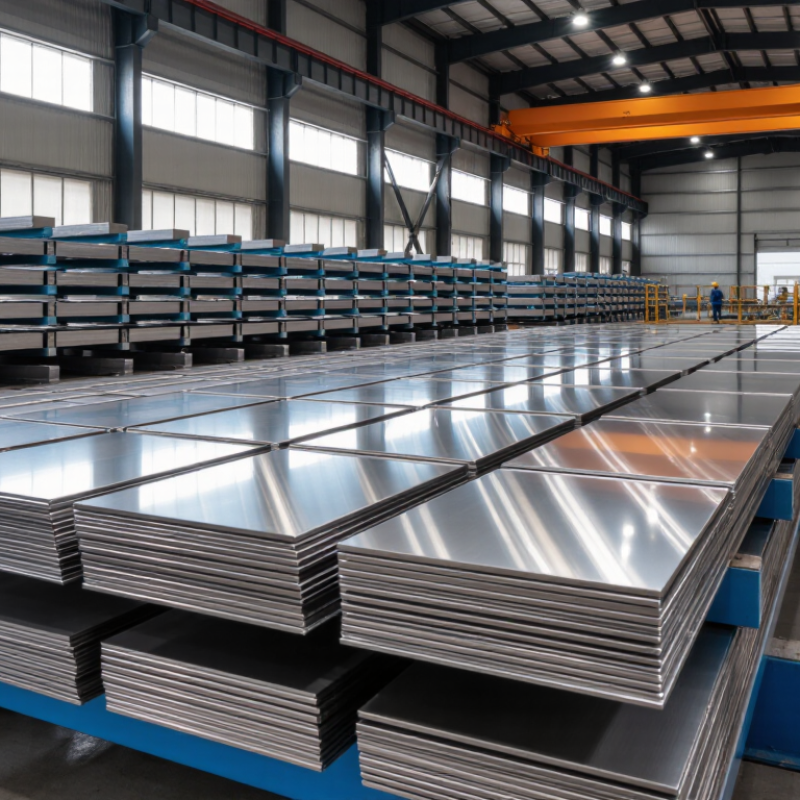
Before comparing suppliers, define exactly what your 316 stainless steel plate must deliver. Specify the grade, such as 316 or 316L, and state the required thickness, width, and length. Include acceptable dimensional tolerances. These details prevent costly misunderstandings during production.
Small details matter. Describe the service environment, including temperature, moisture, salt exposure, and contact with chemicals. Explain whether the plate will be welded, machined, formed, or used for structural support.
Select the surface finish carefully. A brushed finish may suit visible equipment, while a smoother finish can simplify cleaning.
Request material test certificates, heat numbers, chemical composition, mechanical properties, and applicable inspection records. Ask whether the supplier can provide traceability from the plate to its production batch.
A useful lesson from mill inspections is that “316 stainless steel” alone is not a complete specification. It leaves too much room for interpretation.
My own early specifications were sometimes too vague, especially about flatness and edge condition. That created avoidable discussions later.
Do not assume standard tolerances will meet your design. Write every critical requirement into the purchase document, including packaging, marking, delivery length, and certificate format.
If the application is demanding, request sample records or an independent inspection before shipment. The requirement may seem excessive. It can still protect your project.
When evaluating a 316 stainless steel plate supplier, begin with documented material traceability. In practical purchasing, request the original mill test certificate for each production lot. It should show the heat number, chemical composition, mechanical properties, thickness, and applicable standard. Check chromium, nickel, and molybdenum values carefully. They help distinguish genuine 316 material from lower-grade alternatives. The heat number must match the plate marking and packing records. A certificate alone is not proof.
Ask whether an independent laboratory can perform positive material identification, tensile testing, or corrosion-related testing. Portable X-ray fluorescence testing can quickly screen alloy composition on delivered plates. For critical applications, use a laboratory with qualified personnel and controlled test procedures. Compare the report with standards such as ASTM A240 or EN 10088, depending on your project requirements. Small inconsistencies deserve attention.
Certifications also need verification. Review the certificate’s scope, issuing body, validity period, and audited production site. An ISO 9001 certificate may support process control, but it does not replace product testing. Contact the certification body when details appear unclear. I once overlooked a missing heat-number reference during document review. That mistake could have weakened traceability. Suppliers should provide inspection records, surface-condition details, dimensional tolerances, and packaging photographs. Refusal to share basic evidence is a warning sign. Reliable communication matters.
How to Choose a Reliable 316 Stainless Steel Plate Supplier?
A dependable 316 stainless steel plate supplier must prove more than sales ability. Start by examining manufacturing capacity, equipment, and production scheduling. Ask whether the supplier controls melting, rolling, heat treatment, and finishing. Capacity is not only monthly tonnage. It also includes stable lead times during urgent orders. Request recent production records, equipment details, and inspection procedures. A factory visit can reveal practical conditions, including storage, labeling, and material handling.
Traceability should continue from raw material to final shipment. Each plate should carry a heat number, grade, thickness, and production date. Request a mill test certificate with chemical composition and mechanical results. Then match the certificate with physical markings and packing lists. A missing link deserves attention. Digital records help, but they are not automatically reliable. Ask how corrections, replacements, and record access are controlled.
Quality control should cover incoming materials, rolling accuracy, heat treatment, surface condition, and final dimensions. Confirm the testing standards and sampling frequency used for each batch. Third-party inspection can add confidence for large or critical orders. Do not accept “perfect quality” as a complete answer. Define acceptable tolerances, surface limits, packaging methods, and documentation requirements. The honest answer may include a limitation. That can be useful. A supplier admitting occasional rework may appear more credible than one claiming zero problems. Even experienced buyers should revisit their checklist when a familiar process changes.
| Evaluation Dimension | What to Verify | Practical Acceptance Benchmark | Recommended Evidence | Weight | Risk Indicator |
|---|---|---|---|---|---|
| Product Grade and Standard | Confirm whether the plate is 316 or 316L and which product standard governs its manufacture. | Purchase order, marking, and certificate should identify the correct grade and a recognized standard such as ASTM A240/A240M or EN 10088-2. | Mill test certificate, purchase specification, plate marking, and applicable standard revision. | 15% | High |
| Manufacturing Capacity | Assess whether the supplier can consistently produce or source the required thickness, width, length, quantity, and delivery schedule. | Documented monthly capacity, available rolling or finishing equipment, realistic lead time, and contingency arrangements for urgent or repeat orders. | Capacity statement, production schedule, equipment list, sample delivery records, and written lead-time commitment. | 15% | Medium |
| Heat and Lot Traceability | Check whether each plate can be linked to its original heat, production lot, inspection records, and certificate. | Heat number remains legible on the plate or packaging and matches the mill certificate, packing list, and inspection report. | Heat-number photographs, traceability procedure, material identification records, and certificate-to-plate reconciliation. | 20% | High |
| Chemical Composition | Verify chromium, nickel, molybdenum, carbon, manganese, silicon, phosphorus, sulfur, and iron balance against the specified grade. | Results must comply with the selected product standard. For typical 316 chemistry, molybdenum is normally specified at approximately 2.00–3.00%, subject to the governing standard. | Heat-level chemical analysis on the mill certificate and, where required, independent PMI or laboratory verification. | 15% | High |
| Mechanical Properties | Confirm tensile strength, yield strength, elongation, and test direction for the ordered grade and thickness. | For ASTM A240 316 plate, commonly referenced minimum values include 515 MPa tensile strength, 205 MPa yield strength, and 40% elongation; always use the applicable standard and grade. | Heat-specific tensile test report, laboratory accreditation details, specimen orientation, and test method. | 10% | Medium |
| Dimensions and Flatness | Measure thickness, width, length, squareness, edge condition, and flatness against the agreed tolerance. | Inspection results should comply with the dimensional tolerance in the purchase standard or drawing; actual measurements should be recorded, not only marked as “pass.” | Dimensional inspection report, calibrated measuring-tool records, and photographs of plates and edges. | 10% | Medium |
| Surface and Internal Quality | Review surface finish, pits, laminations, cracks, scratches, edge defects, and any required non-destructive testing. | Finish designation and acceptance criteria are defined before production; defects are repaired only within the limits permitted by the applicable standard. | Visual inspection report, surface-finish specification, ultrasonic testing report when required, and repair records. | 10% | High |
| Quality Management System | Evaluate document control, nonconformance handling, corrective action, calibration, internal audits, and supplier control. | A valid ISO 9001 certificate from an accredited certification body is useful, but process records and product-specific controls should also be reviewed. | Current certificate, scope of certification, audit summary, calibration register, and sample corrective-action report. | 5% | Medium |
| Inspection Documentation | Confirm that inspection documents are complete, consistent, signed, dated, and issued for the actual supplied material. | For projects requiring EN 10204, a Type 3.1 inspection certificate should identify the material, heat, test results, and authorized inspection release. | Sample certificate, inspection and test plan, document register, and authorized signatory information. | 5% | Medium |
| Packaging and Delivery Control | Check whether the supplier protects plates from moisture, contamination, impact, distortion, and identification loss during transport. | Packaging should suit the plate size and route, use secure lifting points, preserve markings, and include a packing list matched to the shipment. | Packaging specification, loading photographs, transport plan, packing list, and delivery inspection procedure. | 5% | Medium |
Price matters, but the lowest quotation can hide important costs. Compare prices by grade, thickness, surface finish, plate tolerance, and test documentation. A 10-millimeter 316 plate should not be compared with an unverified equivalent. Ask whether cutting, packing, inspection, and freight are included. Review the quote carefully. Small omissions can change the final cost.
Lead time deserves equal attention. Request a written schedule covering material preparation, testing, cutting, and dispatch. Experienced suppliers should explain their production capacity and stock position clearly. For urgent projects, confirm whether the listed plates are available or only planned for production. A realistic date is more useful than a promising date. I have seen schedules fail when inspection certificates were requested too late.
Delivery terms can affect both risk and cash flow. Check the agreed Incoterm, loading port, insurance responsibility, and destination charges. Confirm the packaging method, especially for plates exposed to moisture during ocean transport. Ask for tracking details and documents before shipment. Include a remedy for late delivery in the purchase agreement, where appropriate. Still, no supplier controls every delay. Weather, port congestion, and document errors can interfere. Build a modest time buffer, even when the supplier appears reliable.
Choosing a reliable 316 stainless steel plate supplier requires more than comparing prices. Service quality often becomes visible after the purchase order is signed. Ask how the supplier handles material certificates, dimensional checks, packaging, and delivery updates. A dependable team should answer clearly and provide documents without repeated reminders.
Communication matters when specifications are detailed. Confirm thickness tolerance, surface finish, plate size, edge condition, and testing requirements in writing. Request a sample certificate before production begins. Check whether heat numbers remain traceable from the plate to the inspection report. Small details prevent expensive confusion later.
Pay attention to response speed and technical understanding. Can the supplier explain corrosion resistance limits, welding considerations, and suitable inspection methods? A vague answer deserves caution. During previous sourcing work, I found that fast replies did not always mean accurate replies. One supplier responded within minutes but overlooked a tolerance requirement. That mistake changed my evaluation completely.
Long-term reliability also depends on how problems are handled. Ask for a corrective-action process, replacement terms, and realistic lead times. Review previous delivery records when available. Inspect packaging details, especially for sea freight, where moisture can damage exposed surfaces. I would also request a trial order before committing to large volumes. It may seem inefficient. Yet one controlled shipment can reveal communication gaps, document errors, or weak packing before they affect production.
Call us at (516) 858-2492
for a free estimate or simply click the button below: