View all current promotions and packages! Click Here!
Nassau/Suffolk
(516) 858-2492
Blog

Top 10 Types of Backsplash for Modern Kitchens

A modern kitchen needs more than a beautiful surface; it needs protection, proportion, and daily practicality. This guide explores the Top 10 Types of Backsplash for Modern Kitchens, from quiet porcelain slabs to expressive handmade tile. The right Back Splash shields walls from oil, steam, splashes, and hurried cleanup. It also connects counters, cabinetry, lighting, and appliances into one visual composition. Materials behave differently under heat, moisture, cleaning products, and changing daylight. That difference matters.

In residential kitchen projects, I have seen polished stone show fingerprints, textured tile collect grease, and pale grout darken near a cooktop. These details rarely appear in showroom photos. A reliable selection considers installation skill, substrate condition, grout width, sealing needs, and replacement access. Porcelain usually offers consistent sizing and low maintenance. Natural stone brings variation, but it may need periodic sealing. Glass can reflect light beautifully, although scratches and visible adhesive lines deserve attention. Metal adds a professional edge, yet water spots can become part of its character.

Style still matters. So does patience. The strongest choices connect with the room’s scale, cooking habits, and budget. Some recommendations may need adjustment, because no kitchen performs exactly like another. A sample board beside cabinet doors can reveal surprises before installation. Check colors under morning and evening light. Confirm product ratings and cleaning guidance with manufacturers or qualified installers. With these practical checks, ten backsplash types become more than trends. They become informed options for a kitchen that looks considered and works hard.
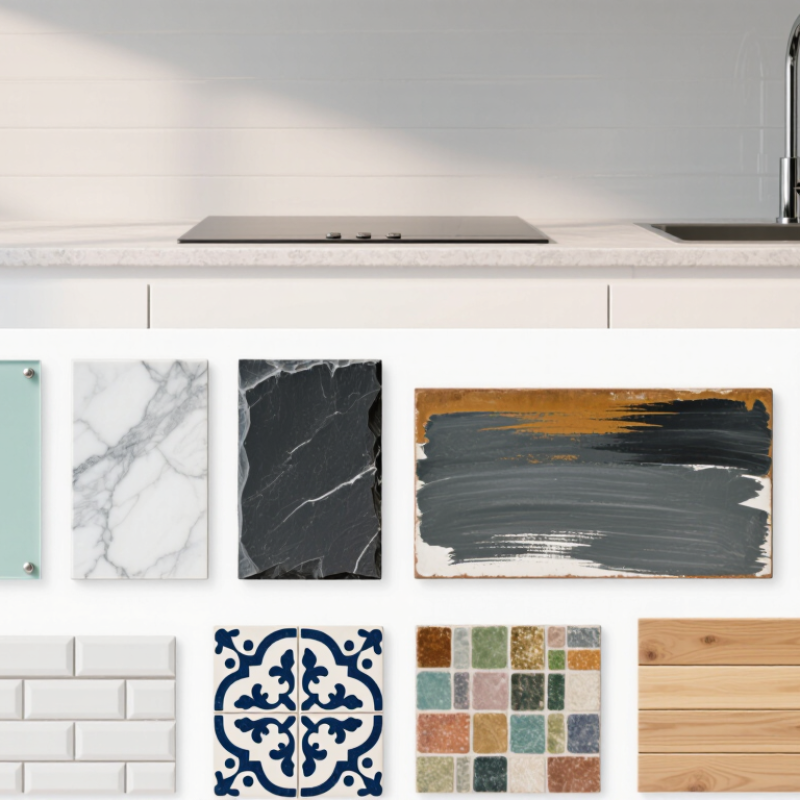
Top 10 Types of Backsplash for Modern Kitchens

Modern Kitchen Backsplashes: Purpose, Features, and Design Principles

Top 10 Types of Backsplash for Modern Kitchens

A modern backsplash protects walls from oil, steam, splashes, and daily abrasion. It also frames the cooking area visually. Popular choices include ceramic tile, porcelain, glass, natural stone, quartz slab, stainless steel, brick, terrazzo, mosaic, and waterproof panels. Each option changes the room’s maintenance needs, texture, and visual scale.

The 2024 NKBA Design Trends Report highlights natural materials, wellness, and easy-care surfaces in contemporary kitchen planning. These priorities support large-format porcelain, sealed stone, and nonporous glass. Fewer grout joints mean fewer places for grease to collect. EPA guidance notes that indoor pollutant levels can be two to five times higher than outdoor levels. Therefore, select low-emission adhesives and maintain effective ventilation near the range.

Design principles matter more than fashion. Match the backsplash’s undertone with cabinetry, counters, and flooring. Use small mosaics for curves, but choose broad slabs for calm, uninterrupted walls. A backsplash should usually meet the countertop without an exposed gap. Extend it higher behind the cooktop when heat and staining are concerns. Matte finishes hide fingerprints; polished surfaces reflect more light. Very dark grout looks dramatic, but it can fade unevenly. I have seen that mistake. Samples should stay in the actual kitchen for several days, because daylight, lamps, and steam can change the color perception.

Ceramic, Porcelain, and Mosaic Tile Backsplash Options

Top 10 Types of Backsplash for Modern Kitchens

Ceramic, porcelain, and mosaic tiles offer different solutions for modern kitchen walls. Ceramic tile remains popular because it is affordable, available in many colors, and easy to replace. Porcelain is denser and less porous, making it useful behind sinks, cooktops, and coffee stations. Grand View Research estimated the global ceramic tiles market at about $227 billion in 2023, with continued growth expected through 2030. The figure signals strong demand, but market size alone does not guarantee quality.

Ceramic works well with glossy subway patterns and handmade-looking surfaces. Its slight color variation can add warmth, though cheaper pieces may chip during cutting. Porcelain creates a cleaner, more architectural appearance. Large-format slabs reduce grout lines, but installation requires flatter walls and more careful handling. That trade-off is often underestimated.

Mosaic tile brings detail to narrow spaces. Glass, stone, and porcelain mosaics can frame a range hood or form a small geometric panel. According to Grand View Research, mosaic tiles are gaining attention for decorative residential applications, especially in renovation projects. Use smaller mosaics around outlets and corners; grout needs more cleaning there. A 2024 National Kitchen & Bath Association trends report also identifies durable, low-maintenance surfaces as important kitchen priorities. Still, “low maintenance” is not maintenance-free. Dark grout may hide stains, yet it can fade or show mineral residue over time. Testing a sample beside the countertop is wiser than trusting a showroom light.

Natural Stone, Quartz, and Marble Backsplash Designs

A modern kitchen backsplash does more than protect walls from splashes. It sets the room’s visual rhythm and affects daily maintenance. Natural stone, quartz, and marble remain strong choices because each offers distinct texture, depth, and performance. Granite provides hard-wearing color variation, while slate adds a darker, layered surface. Travertine brings warm pores and soft movement. Limestone feels quiet, though it needs careful sealing. Texture matters.

Quartz creates a clean, consistent design with very low porosity. It suits busy kitchens and simple geometric layouts. However, it is engineered material, not natural stone. Intense heat can damage some quartz surfaces. Marble gives a refined pattern through natural veining, especially in herringbone or book-matched layouts. It can etch from acids, including lemon juice and vinegar. That flaw is real. Regular sealing helps, but it does not make marble maintenance-free.

Porcelain, ceramic tile, glass, and metal complete ten common backsplash types with quartz, marble, granite, slate, travertine, and limestone. Porcelain can imitate stone with impressive detail. Ceramic offers flexible shapes, colors, and affordable repairs. Glass reflects light across narrow kitchens, while metal adds a practical, industrial edge. Professional installers often find that grout determines the final result. Fine joints look elegant but show crumbs and uneven walls. Larger tiles reduce lines, yet they can expose cutting errors. Check samples beside cabinets under daylight and warm lighting. A beautiful slab may look cold at night.

Top 10 Types of Backsplash for Modern Kitchens

Natural stone, quartz, marble, and other popular backsplash materials compared by typical Mohs hardness.

The Mohs scale indicates resistance to scratching, with higher values generally suggesting a harder surface. The ranges shown are typical reference values and may vary by mineral composition, glaze, finish, and manufacturing process. Hardness does not measure stain resistance, heat resistance, maintenance, or installation cost.

Glass, Metal, Wood, and Concrete Backsplash Styles

Top 10 Types of Backsplash for Modern Kitchens

Glass, metal, wood, and concrete create distinct moods in a modern kitchen. Clear glass keeps walls visually quiet and reflects daylight. Frosted glass softens glare while hiding minor splashes. Textured glass adds depth without heavy patterns. Mirrored glass can make a narrow kitchen feel wider, although fingerprints appear quickly.

Metal brings practical strength. Stainless steel suits busy cooking areas and wipes clean after frying. Copper develops a warmer, changing surface over time. Brushed brass adds gentle contrast, but it needs careful cleaning. Reclaimed wood introduces visible grain and a more personal character. Slatted wood creates rhythm, though grease can collect in its narrow gaps. Sealed wood near a sink still requires attention. It is not maintenance-free.

Concrete offers a calm, architectural finish with subtle color variation. Poured concrete looks seamless, while concrete tiles provide easier replacement after damage. In my experience, sample boards reveal more than online images. Touch the surface under strong light. Check how grout lines meet cabinets and outlets. Glass may show water marks. Metal may feel cold. Wood can darken unevenly. Concrete may develop small hairline cracks, which some homeowners accept as character. I would not choose one surface only for appearance. Heat, moisture, cleaning habits, and installation quality matter more. Even a carefully planned backsplash can have an imperfect corner. That detail deserves a practical fix, not denial.

Top 10 Types of Backsplash for Modern Kitchens - Glass, Metal, Wood, and Concrete Backsplash Styles

A practical comparison of popular backsplash materials for contemporary residential kitchens

No. Backsplash Type Primary Material Typical Appearance Heat & Moisture Performance Cleaning & Maintenance Typical Installed Cost
(USD per sq. ft.)
Best Use
1 Ceramic Tile Glazed ceramic Large format, subway, geometric, or patterned surfaces Good resistance to kitchen heat and moisture; grout requires protection Wipe tiles regularly; clean and reseal grout as needed $15–$35 Versatile, budget-conscious modern kitchens
2 Porcelain Tile Dense porcelain clay Stone, cement, marble, or solid-color finishes Very low water absorption and strong resistance to heat and stains Low maintenance; grout lines still need routine cleaning $20–$45 High-traffic kitchens and minimalist designs
3 Glass Tile Tempered or architectural glass Glossy, reflective, translucent, or mosaic surfaces Nonporous and moisture resistant; avoid direct extreme heat unless rated for it Easy to wipe clean; fingerprints and water spots may be visible $25–$60 Brightening compact or contemporary kitchens
4 Natural Stone Marble, granite, slate, or travertine Veined, textured, or naturally varied patterns Generally heat resistant; porosity varies by stone type Use pH-neutral cleaners; periodic sealing is commonly required $30–$75 Luxury kitchens and organic interior styles
5 Stainless Steel Sheet metal or metal panels Brushed, polished, ribbed, or patterned metallic finish Excellent moisture and heat resistance when properly installed Nonporous and hygienic; clean with a soft cloth to limit scratches $25–$55 Industrial, professional-style, and monochrome kitchens
6 Copper or Brass Metal sheet, tile, or mosaic Warm metallic tones with smooth, hammered, or aged finishes Good heat tolerance; surface finish can change with moisture and acids Wipe spills promptly; sealing may help preserve a consistent finish $30–$70 Warm focal walls and mixed-material kitchens
7 Wood Sealed hardwood, veneer, or reclaimed wood Natural grain, slatted panels, or warm matte finishes Requires a durable finish; should not be used directly behind high-heat cooking areas without protection Keep dry, wipe spills quickly, and refinish when the protective coat wears $20–$50 Scandinavian, Japandi, and natural modern kitchens
8 Concrete Cast or cement-based panels Matte, monolithic, industrial, or subtly mottled surface Heat tolerant and durable when correctly cured and sealed Sealing helps resist stains; avoid harsh acidic cleaners $25–$65 Industrial lofts and minimalist kitchens
9 Quartz Slab Engineered stone with mineral aggregate Continuous stone-look surface with minimal grout lines Nonporous and moisture resistant; prolonged direct heat can damage some surfaces Low maintenance; use manufacturer-approved cleaners and avoid abrasive pads $40–$100 Full-height statement walls and seamless designs
10 Peel-and-Stick Panels PVC, vinyl, composite, or lightweight metal Printed tile, stone, terrazzo, or geometric patterns Performance depends on the product; many are unsuitable directly behind gas burners Simple to wipe; edges and adhesive may require replacement over time $10–$30 Rental upgrades, quick renovations, and low-cost visual changes

Cost ranges are typical planning estimates for residential installations in the United States and can vary according to material grade, layout complexity, surface preparation, labor rates, grout, sealing, and edge details.

How to Choose, Install, and Maintain a Modern Kitchen Backsplash

Choosing a modern kitchen backsplash starts with real use, not a showroom photograph. Houzz’s 2024 U.S. Kitchen Trends Study reports that roughly two-thirds of renovating homeowners upgraded their backsplash. That demand reflects its practical role. Porcelain and ceramic tile suit heavy cooking and simple cleaning. Glass brightens small rooms. Natural stone adds texture but needs more care. Large-format slabs reduce grout lines, though replacement can be expensive if one panel cracks.

Measure the wall after cabinets and worktops are fixed. Leave a small movement gap at corners and cover it with flexible sealant. The Tile Council of North America recommends suitable substrates, correct adhesive, and movement accommodation; skipping one detail can cause cracked joints. Dry-lay the pattern first. Mark outlets carefully. A professional installer should check wall flatness, moisture exposure, and tile weight before bonding materials. I would not install directly over dusty drywall. It feels faster, but it often creates a weak bond.

Maintenance should match the surface. Wipe cooking splashes with warm water and a pH-neutral cleaner. Avoid abrasive powders and acidic products on stone. Seal porous stone when the manufacturer’s technical guidance requires it, not on an automatic schedule. The U.S. Environmental Protection Agency notes indoor pollutant levels can be two to five times higher than outdoors, so use an externally vented hood when possible. A beautiful backsplash still fails if grease remains around the grout. That is the part many homeowners underestimate.

Article Source:

Wait! You Forgot Your Free Estimate!

Call us at (516) 858-2492
for a free estimate or simply click the button below:

Submit Request Form
adelphic tracking pixel