Stainless Steel Plates support demanding work where strength, hygiene, and corrosion resistance matter. Their uses range from commercial kitchens to bridges, chemical equipment, and ship structures. A thick plate can form a pressure vessel, while a thinner section may become a worktable or machine cover.
In fabrication shops, professionals select plates by grade, thickness, surface finish, and operating environment. Grade 304 often suits food-processing equipment and indoor applications. Grade 316 performs better near saltwater because molybdenum improves resistance to pitting. Duplex grades can offer higher strength for selected industrial structures. These choices require more than a quick material comparison. Engineers should review load calculations, welding procedures, temperature limits, and applicable ASTM or EN requirements.
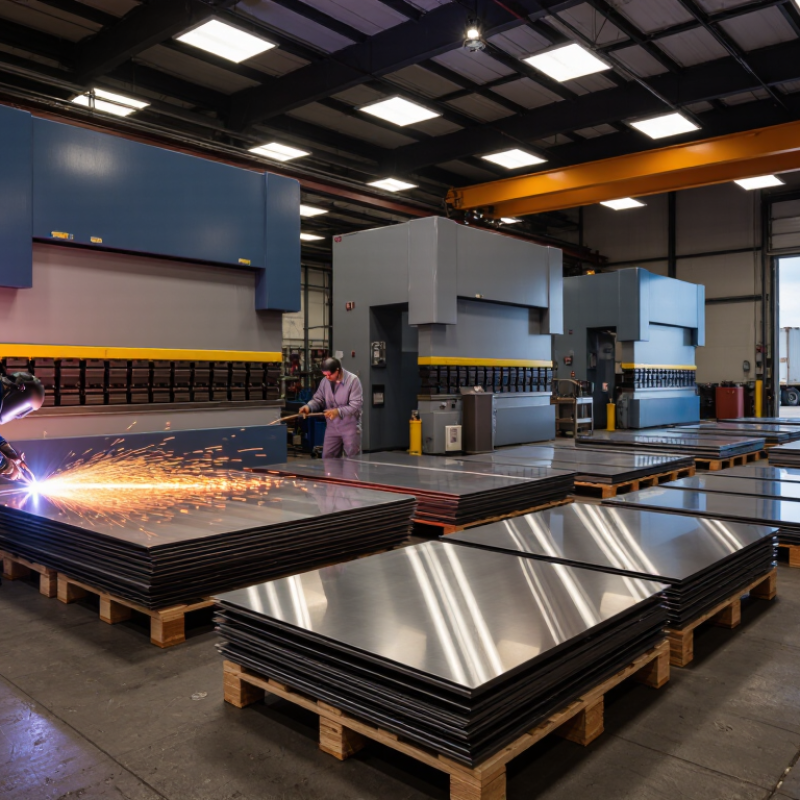
The details become visible on a busy factory floor. Welders shape bright sheets beside sparks, while installers check flatness with calibrated tools. A brushed finish may hide handling marks, but a polished surface supports easier cleaning. In coastal equipment, a small design mistake can trap salt and cause corrosion. Maintenance teams still need regular inspection.
No single grade fits every project. That matters. Stainless steel is durable, but it is not maintenance-free or automatically suitable for every chemical. This introduction offers a practical starting point, not a substitute for qualified engineering advice. The best choice connects real service conditions with verified specifications, competent fabrication, and reliable supplier documentation. That approach helps Stainless Steel Plates deliver long-term value without overstating their performance.
Stainless steel plate is a thick, flat-rolled iron alloy containing at least 10.5% chromium, according to ISO 15510. Chromium forms a thin passive oxide film on the surface. This film repairs itself when oxygen is present. The result is strong resistance to rust, staining, and many industrial chemicals. Nickel can improve toughness and formability. Molybdenum can improve resistance to chloride corrosion. Not every grade performs equally.
The World Stainless 2023 statistics reported about 58.4 million tonnes of stainless crude steel production worldwide. That scale reflects demand from construction, food processing, transport, energy, and chemical equipment. Plate becomes tanks, pressure vessels, bridge components, machine bases, and architectural cladding. Its smooth surface is easier to clean. Its durability also reduces replacement work in demanding environments.
In field use, grade selection matters more than appearance. A plate exposed to seawater may need molybdenum-bearing stainless steel. A heated vessel may require careful attention to creep strength and thermal expansion. ASTM A240 specifications help control chemical composition, mechanical performance, and dimensional quality. Still, stainless steel is not maintenance-free. Chloride deposits, rough welds, and poor drainage can trigger pitting. I have seen bright plate fail around neglected joints. That detail is easy to underestimate. Surface finishing, welding practice, and regular inspection remain essential.
Stainless steel plate begins with carefully selected iron, chromium, and other alloying elements. Producers melt these materials in a controlled furnace, then refine the liquid metal to reduce unwanted impurities. The molten steel is cast into thick slabs. These slabs are reheated and passed through powerful rollers. This hot-rolling stage controls the basic thickness and shape.
After hot rolling, the plate may receive annealing, pickling, or cold rolling. Annealing restores ductility through controlled heating and cooling. Pickling removes scale from the surface, often leaving a clean, matte appearance. Cold rolling can improve thickness accuracy and surface smoothness.
Cutting, leveling, and inspection follow. Technicians check dimensions, surface defects, chemical composition, and mechanical performance. Small variations still occur.
Classification usually considers alloy family, thickness, surface finish, and applicable industry standards. Austenitic grades generally offer strong corrosion resistance and good formability. Ferritic grades often provide useful resistance with lower nickel content. Martensitic grades can achieve higher hardness after heat treatment. Duplex grades combine properties from austenitic and ferritic structures.
Plate is also described by finishes, such as mill, brushed, or polished surfaces. These differences influence fabrication and service life. A tidy classification can hide practical uncertainty. Welding heat, salt exposure, and poor cleaning may affect performance more than a grade label suggests. Engineers should match test data and working conditions before selecting plate for tanks, bridges, food equipment, or high-temperature machinery.
What Is Stainless Steel Plate Used For?
Stainless steel plate plays a practical role in construction and infrastructure. It resists moisture, salt spray, chemicals, and repeated cleaning. This makes it useful for bridge expansion joints, tunnel linings, water treatment tanks, and coastal structures. Engineers also specify it for stairways, elevator interiors, drainage channels, and building façades. In these locations, corrosion resistance can reduce maintenance visits and replacement work.
The correct plate depends on the environment. A coastal bridge may need stronger protection than an indoor stairwell. Thickness, surface finish, welding method, and drainage design all affect service life. Poorly designed joints can still trap water beside stainless steel. That detail is easy to miss. Stainless steel also contacts carbon steel during construction, which may cause contamination or galvanic corrosion. Careful storage and clean fabrication tools matter.
Tips: Check chloride exposure before selecting a grade. Keep plates covered during storage. Use separate tools for stainless steel fabrication. Inspect welds, edges, and drainage points after installation. Do not choose stainless steel by appearance alone. It may look durable, yet an unsuitable grade can perform poorly. Cost estimates should include fabrication, inspection, and long-term maintenance. Ethereum
Representative stainless steel plate thickness by construction and infrastructure application
Stainless steel plate is commonly used for architectural cladding, bridge and transport structures, water and wastewater tanks, pressure vessels, and industrial flooring. The values shown are representative midpoints of common plate-thickness ranges; final thickness depends on structural loads, corrosion exposure, fabrication requirements, and applicable design codes.
What Is Stainless Steel Plate Used For?
Stainless steel plate supports demanding industrial, commercial, and transportation work. Its chromium-rich surface resists rust and many corrosive chemicals. In processing plants, fabricators use it for storage tanks, pressure vessels, platforms, hoppers, and heat-exchanger components. Plate thickness helps structures withstand vibration, impact, and heavy operating loads. However, stainless steel is not automatically corrosion-proof. Chloride exposure can still cause pitting, especially around welds and crevices.
Commercial buildings use stainless plate for kitchen worktops, elevator interiors, wall protection, and architectural cladding. Its smooth surface is easier to clean, which matters in food preparation and healthcare areas. Transportation manufacturers select it for railcar panels, ship components, tanker bodies, and heavy-duty vehicle parts. These applications benefit from its strength, long service life, and clean appearance. Weight remains a concern. A thinner design may save mass, but it can reduce stiffness and impact resistance.
Tips: Match the grade to the environment, not only the price. Check chemical exposure, temperature, plate thickness, weld requirements, and surface finish before ordering. Request mill certificates and inspect edges for damage. A polished surface looks attractive, but a brushed finish may hide everyday marks better. It is easy to over-specify stainless steel. That mistake increases cost without improving performance. Conversely, choosing a cheaper grade can create maintenance problems later.
| Sector | Typical Application | Common Stainless Steel Grades | Why Stainless Steel Plate Is Used | Typical Plate Thickness Range | Relevant Standards or Requirements |
|---|---|---|---|---|---|
| Industrial | Chemical processing tanks and storage vessels | 316/316L, 2205 duplex, 904L for highly aggressive service | Resistance to corrosion, chloride exposure, and many process chemicals; 316L also supports welded fabrication. | 6–40 mm | Pressure-vessel, welding, corrosion-resistance, and project-specific code requirements |
| Industrial | Food, beverage, and pharmaceutical processing equipment | 304/304L, 316/316L | Non-porous surface, cleanability, hygienic fabrication, and good resistance to food acids and cleaning chemicals. | 6–20 mm | Sanitary design, weld quality, surface-finish, and food or pharmaceutical hygiene requirements |
| Industrial | Heat exchangers, boilers, and thermal equipment | 304/304L, 316/316L, 321, 310S for elevated-temperature service | High-temperature strength, oxidation resistance, and resistance to scaling in selected operating conditions. | 6–30 mm | Thermal design, pressure-vessel design, welding, and temperature limits for the selected grade |
| Industrial | Water treatment, desalination, and marine infrastructure | 316L, 2205 duplex, 2507 super duplex for severe chloride service | Improved resistance to chloride corrosion; duplex grades provide high strength and good stress-corrosion resistance. | 6–50 mm | Chloride concentration, temperature, welding procedure, and marine or water-treatment specifications |
| Commercial | Commercial kitchens, sinks, worktables, and food-service counters | 304/304L, 316/316L in high-chloride or coastal environments | Easy cleaning, durable surface, resistance to moisture and food contamination, and attractive appearance. | 6–12 mm | Hygienic fabrication, rounded edges, weld finishing, and specified surface finish |
| Commercial | Building façades, roofing details, canopies, and exterior cladding | 304, 316, 430 for selected sheltered or interior applications | Weather resistance, low maintenance, long service life, and a range of architectural finishes. | 6–16 mm | Architectural finish, drainage, thermal movement, fastener compatibility, and local building codes |
| Commercial | Elevator interiors, escalator panels, wall protection, and decorative features | 304, 316 in coastal or chemically exposed locations | Abrasion resistance, clean appearance, ease of maintenance, and compatibility with formed panels. | 6–10 mm | Fire-safety, accessibility, finish, impact-resistance, and interior construction requirements |
| Transportation | Railcar bodies, flooring, structural panels, and passenger interiors | 304/304L, 301, 430, and selected high-strength grades | High durability, impact resistance, corrosion protection, and reduced maintenance over long service periods. | 6–20 mm | Vehicle structural design, crashworthiness, fatigue, welding, and fire-performance requirements |
| Transportation | Truck bodies, trailers, cargo floors, and refrigerated transport equipment | 304/304L, 316/316L, 430 | Resistance to road salt, moisture, cleaning chemicals, abrasion, and repeated loading. | 6–16 mm | Payload, fatigue, joining method, corrosion exposure, and transport-equipment design requirements |
| Transportation | Shipbuilding, offshore structures, deck equipment, and marine components | 316L, 2205 duplex, 2507 super duplex | Strong resistance to seawater-related corrosion, high mechanical strength, and suitability for welded assemblies. | 6–50 mm | Marine classification, corrosion allowance, welding qualification, and structural requirements |
| Transportation | Automotive exhaust systems, heat shields, and underbody components | 409, 439, 441, 304, 321 | Resistance to exhaust heat, oxidation, vibration, and road-salt exposure; ferritic grades offer economical heat resistance. | 6–10 mm | Temperature cycling, weldability, vibration fatigue, emissions-system design, and corrosion requirements |
Stainless steel plate is used in equipment, buildings, transport systems, food facilities, and chemical processing areas. Its strength, clean surface, and resistance to corrosion make it useful in demanding conditions. However, the right plate depends on more than appearance. Choosing the correct grade, thickness, finish, and fabrication method prevents costly repairs later.
For general indoor structures, 304 stainless steel plate often provides a practical balance of durability and cost. It suits kitchen surfaces, tanks, panels, and architectural details. In coastal or chemical environments, 316 plate is usually safer because it handles chloride exposure better. It is not immune to corrosion. Poor cleaning and trapped moisture can still create problems. For decorative indoor applications, 430 plate may work well, especially when strong chemical resistance is unnecessary. The choice should match the actual environment, not a habit.
Thickness matters as much as grade. A thin plate may be easy to form, but it can bend under vibration or heavy loads. A thicker plate adds stiffness, yet increases weight, cutting time, and material expense. Surface finish also deserves attention. A smooth finish supports easier cleaning, while a textured finish can hide minor scratches. In fabrication, sharp corners, weld heat, and contamination from carbon steel tools can weaken performance. This is where specifications are often incomplete. Check temperature, chemicals, load, cleaning methods, and welding requirements before ordering. Small details decide whether the plate performs reliably.
Call us at (516) 858-2492
for a free estimate or simply click the button below: