Choosing a Car Aroma Diffuser supplier involves more than comparing product photos. Buyers need to assess diffuser design, fragrance delivery, materials, customization options, and production capacity. A unit that looks refined on a desk may behave differently inside a warm, vibrating vehicle. Small details matter: the fit of a vent clip, the seal around a refill, and whether scent intensity feels adjustable rather than overpowering.
This guide introduces ten suppliers worth evaluating, using practical criteria such as product range, manufacturing information, sample availability, communication, and after-sales support. It does not treat a polished website as proof of quality. Ask for clear specifications, sample units, realistic lead times, and details about quality checks before placing a larger order. No supplier is perfect. Even a capable factory may have limits on materials, order quantities, or customization. A missed detail can become an expensive surprise.
Supplier rankings can change as product lines and service standards evolve. Use this list as a starting point, then compare candidates against your market, budget, and packaging needs. Look closely at how each supplier handles refill compatibility and product consistency, not only the first sample. And yes, a small imperfection in a sample deserves a question. Careful verification makes the shortlist more useful and the final sourcing decision more dependable.
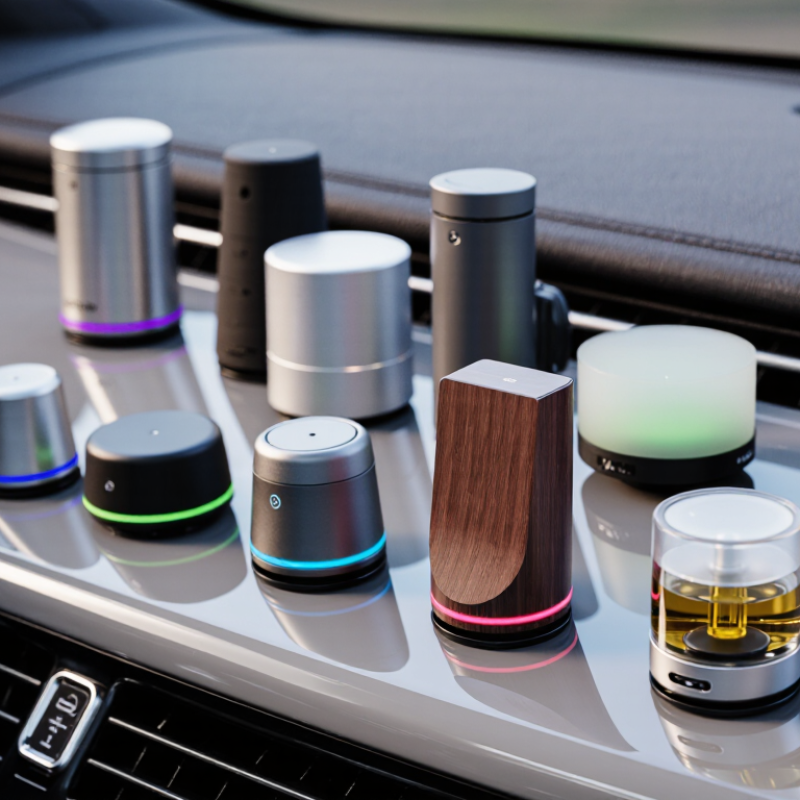
Car aroma diffuser suppliers offer more than finished devices. Many provide compact vent clips, cup-holder models, and USB-powered units for different cabin layouts. Buyers can often choose materials, colors, fragrance intensity, and packaging. Some suppliers also support custom molds or printed instructions, though these options may require larger orders.
A dependable supplier should explain how the diffuser works, what materials contact the fragrance, and how output can be adjusted. Ask for sample units and clear product specifications. Check whether the device leaks when tilted or leaves residue near a vent. Quality checks matter. A sample may perform differently from a later production batch, so agreed inspection standards are useful. No supplier can remove every uncertainty.
Tips: Test samples in a parked vehicle before ordering in volume. Note scent strength after a few hours, inspect nearby surfaces, and check whether refills are easy to replace. Request packaging dimensions and shipping protections, too. Small details matter. Compare written claims with the actual sample, and ask how defects are handled. Suppliers vary, and I would not assume every customization is worth the added cost.
This comparison presents ten common supplier categories rather than a ranked list of named companies. Product availability, specifications, and customization options vary by supplier and should be confirmed before ordering.
| Supplier Category | Common Product Types | Typical Power or Operation | Common Customization | Typical Buyer Fit | What to Verify |
|---|---|---|---|---|---|
| Automotive accessory manufacturers | Vent-clip diffusers, hanging diffusers, and compact dashboard units | Often passive evaporation or vehicle-powered operation, depending on the model | Housing color, packaging, logo placement, and fragrance selection | Retailers and automotive accessory distributors | Vehicle compatibility, attachment security, material quality, and fragrance leakage controls |
| Electronics manufacturers | USB-powered or rechargeable electric diffusers | USB input, rechargeable battery, or another specified low-voltage power source | Enclosure design, controls, finish, packaging, and selected electronic features | Buyers seeking powered products with adjustable operation | Electrical safety documentation, battery details, charging requirements, and applicable market regulations |
| Ultrasonic diffuser producers | Water-based mist diffusers designed for vehicle interiors | Uses an ultrasonic mechanism to create mist from water and fragrance, where supported by the product | Capacity, exterior color, control settings, and retail packaging | Buyers looking for a visible mist effect and adjustable use | Recommended liquid, spill resistance, cleaning instructions, and suitability for vehicle use |
| Waterless diffuser specialists | Compact devices that disperse fragrance without adding water | Typically powered or manually operated, depending on the design | Intensity settings, cartridge format, housing, and packaging | Buyers who prefer a water-free product format | Compatible refill specifications, operating instructions, and fragrance-material information |
| Fragrance and essential-oil suppliers | Fragrance oils, refill bottles, scented pads, and compatible diffuser accessories | Operation depends on the diffuser format used with the fragrance | Scent selection, fragrance strength, bottle format, and private-label packaging | Brands and retailers sourcing fragrance or replacement consumables | Ingredient disclosures, safety information, storage guidance, and diffuser compatibility |
| Passive diffuser and insert suppliers | Felt pads, porous inserts, wooden diffusers, and other evaporation-based products | Passive evaporation; normally does not require electrical power | Insert shape, material, scent, holder design, and package format | Buyers seeking simple products without charging or wiring | Replacement availability, scent duration claims, material consistency, and secure mounting |
| Private-label manufacturers | Selected diffuser formats produced for a buyer’s own label | Varies according to the chosen product and design | Labeling, packaging, color, product configuration, and fragrance options | Retailers and businesses developing their own product line | Minimum order quantity, sample approval, artwork requirements, lead time, and quality-control process |
| Custom product-development suppliers | Made-to-specification housings, mounts, components, or complete diffuser products | Defined during product design; may be passive, vehicle-powered, or rechargeable | Industrial design, dimensions, materials, controls, and packaging | Buyers with a distinct product concept or functional requirement | Tooling ownership, prototype stages, design changes, testing plan, and production schedule |
| Promotional merchandise suppliers | Branded vent clips, hanging diffusers, and small gift-ready sets | Frequently passive, though powered options may also be available | Logo printing, promotional packaging, color, and scent choice | Businesses sourcing event gifts or promotional products | Print durability, sample quality, fragrance handling, and delivery deadlines |
| Wholesale distributors and sourcing companies | A mixed selection of ready-made diffusers, refills, and related accessories | Depends on the products in the distributor’s range | May include assortment selection, packaging, or limited label services | Buyers comparing multiple product formats or purchasing stocked goods | Product origin, stock status, documentation, return terms, and consistency between samples and bulk orders |