Choosing the best Sliding Glass Doors for global buyers requires more than comparing photographs or promotional claims. Performance depends on climate, building design, installation quality, and local service support. A door that glides quietly in a mild showroom may struggle with coastal salt, desert dust, or freezing temperatures. Details matter.
This guide examines leading sliding glass door options through practical buying criteria. These include thermal insulation, glass safety, frame durability, roller performance, drainage, security hardware, and warranty clarity. We also consider certifications and testing records where manufacturers provide reliable documentation. Independent advice from architects, installers, and building professionals can strengthen the decision.
There is no universal winner. No ranking is perfect. Regional standards differ, and product data may not always be presented consistently. Buyers should verify U-values, air and water resistance, wind-load ratings, and replacement-part availability before ordering. A heavy triple-glazed panel may improve comfort, yet it can demand stronger structural support and more careful installation. Lightweight systems may offer easier handling, but their seals and rollers require close inspection.
Real-world ownership matters. Ask how the door performs after repeated opening, seasonal movement, and years of cleaning. Examine sample corners, locking points, tracks, and drainage channels. Reliable suppliers should explain limitations instead of promising flawless performance. The following overview compares suitable systems for different climates, budgets, and architectural needs, helping international buyers make a more informed and defensible choice.
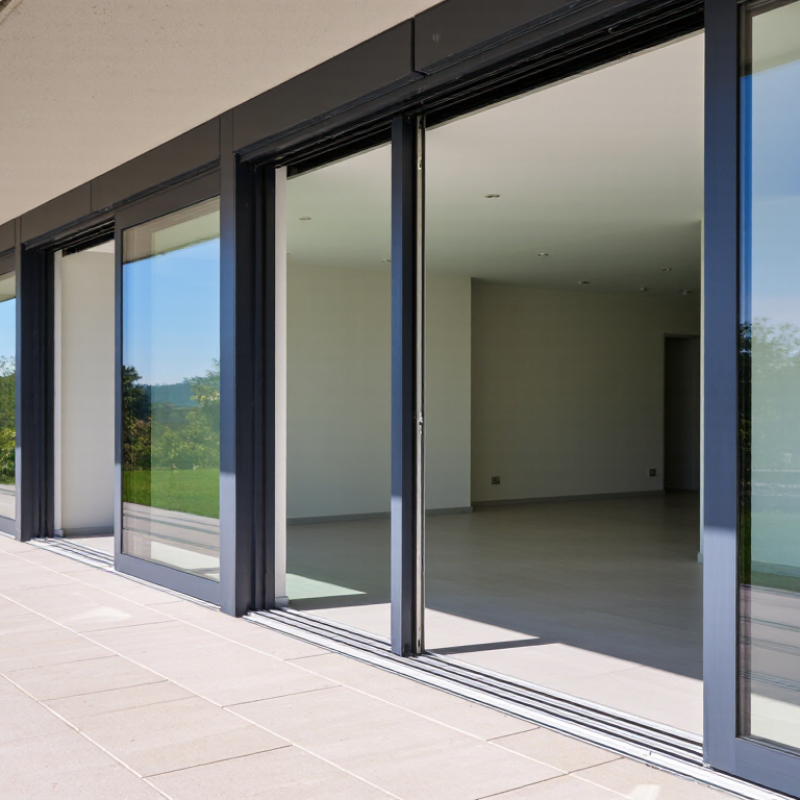
Sliding glass doors suit different spaces, climates, and traffic levels. Two-panel doors work well for apartments, balconies, and compact patios. Their simple tracks are easy to maintain. Three- and four-panel systems create wider openings for villas, restaurants, and hotel terraces. Multi-slide and telescopic doors can stack panels beside one wall. They provide stronger visual connections between indoor and outdoor areas. Lift-and-slide doors offer smoother movement for large, heavier panels. Pocket doors disappear into the wall, but they require careful structural planning.
Climate should guide the specification. The U.S. Department of Energy reports that windows can cause 25–30% of residential heating and cooling energy use. Therefore, low-emissivity glass, insulated frames, and reliable weather seals matter. Thermally broken aluminum suits modern buildings and demanding coastal projects. uPVC frames can support residential energy efficiency and lower maintenance. Wood frames add warmth, but they need regular protection in humid conditions. UNEP’s 2023 Global Status Report states that buildings and construction consumed over 34% of global energy in 2022. A poorly selected door can quietly increase operating costs.
Tips: Measure the opening after finishing work, not before. Check wind exposure, drainage, threshold height, and local safety requirements. Ask for tested air, water, and structural performance. A large glass panel looks impressive, but it may reduce thermal comfort without shading. I have seen buyers focus on frame color first. That choice is understandable, yet performance should lead the discussion. Manufacturers’ thermal figures can differ by testing method, so compare complete door systems, not isolated glass values.
What Are the Top Sliding Glass Doors for Global Buyers?
Key Performance Standards for Global Buyers
For global buyers, a sliding glass door is more than a wide opening. Its performance must survive local weather, transport, installation, and daily use. Ask for tested air leakage, water penetration, and structural load results. These figures reveal more than attractive drawings. In windy coastal areas, pressure resistance matters greatly. In humid regions, drainage paths and corrosion-resistant hardware deserve close inspection. Small details matter.
Thermal performance should match the building’s climate zone. Request the U-factor, solar heat gain coefficient, and glazing configuration. Lower heat transfer can reduce cooling demand, but excessive solar control may darken interiors. Balance is essential. Safety glazing should comply with the destination market’s rules. Tempered or laminated glass can reduce injury risks after breakage. Check frame tolerances, interlock design, roller durability, and locking security. Hardware should operate smoothly after thousands of cycles. Yet cycle claims may not reflect dust, salt, or poor installation.
Reliable suppliers provide independent test reports, clear tolerances, maintenance instructions, and replacement-part information. Confirm whether results cover the complete door system, not glass alone. Installation evidence is equally important. A high-performing door can leak when the sill is uneven or flashing is missing. That is a practical weakness buyers sometimes overlook. Ask for mock-up testing when projects face severe wind or rain. Review accessibility requirements, energy codes, fire separation limits, and export documentation with qualified local professionals. Standards vary, and one certificate rarely answers every question.
Global buyers should compare more than opening size and glass appearance. According to the UNEP 2023 Global Status Report for Buildings and Construction, buildings consume about 32% of global energy. That makes thermal performance a purchasing issue, not decoration. For hot climates, low-emissivity double glazing with solar control can reduce unwanted heat. In colder zones, triple glazing may help, but its extra weight requires stronger rollers and deeper frames. Ratings must match the climate.
Glass is only one layer. The National Fenestration Rating Council emphasizes U-factor and solar heat gain coefficient when evaluating window and door performance. The U.S. Department of Energy estimates that windows can cause 25–30% of residential heating and cooling energy loss. Frames deserve equal scrutiny. Thermally broken metal frames reduce heat transfer, while uninsulated metal can create cold edges and interior condensation. Ask for tested air leakage, water resistance, and wind-load figures. Numbers beat showroom language.
Seals often determine long-term comfort. Dual compression seals can block drafts, but poor corner joints may still leak after repeated movement. Hardware should include corrosion-resistant rollers, adjustable carriers, and secure multi-point locking. Testing under recognized fenestration standards adds useful evidence. Field inspections often find installation gaps hidden behind trim. Published figures can mislead. Installation remains the weak link. A beautiful specification may still perform poorly when the sill lacks drainage or the frame is slightly twisted.
For global buyers, top sliding glass doors should be judged by evidence, not polished catalogs. The International Energy Agency reported that buildings consumed about 30% of global final energy in 2022. The U.S. Department of Energy also notes that windows can cause 25% to 30% of residential heating and cooling energy use. Therefore, examine U-values, air leakage, water resistance, and solar heat gain. A sample door should open smoothly after repeated cycles, even with dust inside the bottom track.
Certifications reveal manufacturing discipline. ISO 9001 can indicate controlled production, but it does not prove strong thermal performance. Ask for current test reports under standards such as ASTM E283, ASTM E331, ASTM E330, or EN 14351-1, depending on the destination market. Check the tested size, glass build-up, hardware, and laboratory details. A certificate covering a small sample may not represent a larger commercial door. This is often missed.
Supply capacity needs equal attention. Request monthly output, confirmed lead times, glass-processing limits, packaging photos, and recent inspection records. Compare claimed capacity with container-loading plans. A factory promising thousands of units may still lack enough tempered glass or qualified installers. That gap matters. During supplier audits, I would inspect barcode traceability, corner joints, drainage holes, and spare-hardware storage. I would also allow a margin for delays, because production schedules rarely remain perfect. Industry reports can guide market expectations, but factory evidence remains more useful.
| Evaluation Dimension | Entry-Level Capability | Commercial-Grade Capability | Premium / High-Performance Capability | Recommended Buyer Verification |
|---|---|---|---|---|
| Typical Door Configuration | Two-panel sliding door; standard residential openings | Two- to four-panel systems; residential and light commercial use | Large-panel, lift-and-slide, multi-track, or thermally enhanced systems | Approved drawings, maximum panel dimensions, and tested operating weight |
| Frame Material | Aluminium or uPVC with standard reinforcement | Powder-coated or anodized aluminium; reinforced uPVC options | Thermally broken aluminium, stainless-steel hardware, or engineered composite profiles | Profile drawings, coating specification, alloy grade, and thermal-break details |
| Glass Options | Single tempered safety glass, commonly 6–10 mm | Double insulating glass units with tempered or laminated panes | Low-emissivity coatings, laminated safety glass, solar-control glass, and triple glazing | Glass thickness, safety classification, spacer type, U-value, and solar-factor documentation |
| Relevant Glass Standards | Tempered glass tested to the destination-market safety standard | EN 12150, EN 14449, ASTM C1048, or equivalent regional standards | Applicable standards for tempered, laminated, and insulating glass assemblies, supported by test reports | Laboratory reports showing standard number, specimen size, test date, and issuing laboratory |
| Thermal Performance | Basic weather sealing; performance varies by configuration | Insulating glass and improved seals for moderate climates | Thermally broken frames and low-emissivity glazing for demanding energy codes | Whole-door U-value, air-leakage data, and thermal-bridge calculations |
| Water and Air Resistance | Suitable for sheltered residential applications | Tested weather seals for standard residential and commercial exposure | Project-specific water, air, and structural-performance testing | Test method, pressure level, pass/fail result, and report scope for the complete door assembly |
| Security Features | Single-point lock and basic anti-lift device | Multi-point locking, reinforced keep, and improved anti-lift protection | Tested security hardware, laminated security glass, and concealed or multipoint systems | Security test standard, hardware cycle tests, lock specification, and glass classification |
| Quality Management | Basic incoming and final inspection procedures | Documented inspection plan, batch records, and nonconformance procedures | ISO 9001-certified quality system with traceability and corrective-action records | Current certificate, certification scope, issuing body, and audit validity |
| Market Certifications | Basic product documentation for the target market | Applicable regional declarations and construction-product documentation | Market-specific testing, energy declarations, environmental documentation, and compliance files | Confirm whether CE, UKCA, ASTM, CSA, or other marks are legally applicable to the destination |
| Indicative Production Capacity | Approximately 50–300 complete units per month | Approximately 300–2,000 complete units per month | Approximately 2,000+ standard units per month, subject to project mix | Production records, current utilization, equipment list, and capacity reserved for the buyer |
| Customization Capability | Limited color, size, and hardware selections | Customized dimensions, finishes, glazing, screens, and hardware packages | Engineered systems, non-standard dimensions, BIM files, mock-ups, and project-specific testing | Approved shop drawings, prototype process, engineering support, and change-control procedure |
| Typical Production Lead Time | Approximately 3–6 weeks after drawing approval | Approximately 5–10 weeks after drawing and material approval | Approximately 8–16 weeks for engineered or project-specific systems | Confirm lead time by order quantity, glazing type, finish, tooling, and inspection requirements |
| Export and Packaging Readiness | Basic export packaging and standard shipping documents | Reinforced crates, container loading plans, labels, and packing lists | Project logistics planning, moisture protection, barcode traceability, and installation-sequence packaging | Packaging test images, loading plan, Incoterms, insurance responsibility, and damage-claim process |
| After-Sales Support | Replacement parts subject to availability | Parts list, installation guidance, and defined warranty terms | Technical training, spare-parts planning, site support, and documented claims management | Written warranty exclusions, spare-parts availability period, response time, and service contacts |
| Best-Fit Application | Budget-sensitive interior or sheltered residential projects | Mainstream residential developments and light commercial buildings | Coastal, high-rise, luxury residential, hospitality, and energy-conscious projects | Match the system to wind exposure, climate zone, building height, code, and installation conditions |
What Are the Top Sliding Glass Doors for Global Buyers?
For global buyers, a sliding glass door is not just a visual upgrade. Installation quality often decides whether the door stays secure, quiet, and weather-tight. Measure the opening in three places, then check the wall for movement and moisture. A level track matters more than an attractive catalogue image. It prevents uneven rollers, stiff travel, and premature glass stress. Use certified installers familiar with local building codes, wind loads, drainage, and safety glazing requirements. Do not assume one installation method fits every climate. Coastal air, freezing temperatures, and intense sunlight demand different preparation. Small errors become expensive.
Maintenance is simple, but rarely optional. Clean the track every few months with a soft brush and vacuum. Wipe rollers and drainage channels before dirt becomes compacted. Inspect seals for gaps, brittleness, or water marks. Lubricate only with a product approved for the hardware. Heavy oil can trap grit. The glass needs non-abrasive cleaner and a soft cloth. Check the lock after seasonal temperature changes. If the panel drags, stop forcing it. A technician should adjust or replace worn rollers. I have seen owners postpone this repair until the frame and track also needed replacement.
Total ownership cost includes more than purchase price and shipping. Add installation labor, structural preparation, taxes, spare rollers, cleaning supplies, energy loss, and future service visits. Better insulation may cost more initially, yet it can reduce indoor heat exchange. Compare warranty coverage, parts availability, and installer support in your region. A low quote can hide difficult access or missing drainage work. Request a written scope with measurements and maintenance responsibilities. Be realistic. Glass doors still need care. The cheapest option is not always economical over ten years.
Installation, maintenance, and total ownership costs for a standard 2.4 m × 2.1 m sliding glass door opening.
The figures are indicative mid-market estimates in USD for a complete door package, professional installation, and ten years of routine maintenance. They exclude taxes, international shipping, structural alterations, and regional labor premiums. uPVC systems generally offer the lowest ownership cost, while wood-clad systems provide a premium appearance but require a larger long-term budget.
Call us at (516) 858-2492
for a free estimate or simply click the button below: